


The Muslim community of Zelenodolsk in the Russian Republic of Tatarstan has opened the new Al-Anjam Mosque, adding to a growing network of mosques in a region where Islam has had a presence for more than a thousand years.
The mosque was officially opened on 27 August 2026, corresponding to around 15 Rabi al-Awwal 1448 AH, in the presence of the Mufti of the Republic of Tatarstan and head of the Spiritual Directorate of its Muslims, Kamil Samigullin, a number of imams from the region, officials and public figures, as well as city residents, donors and contributors to the project.
The opening ceremony began with recitation from the Holy Quran. On the occasion, the Mufti of Tatarstan stressed the importance of the mosque in the life of Muslims, not only as a place of prayer but also as a centre for education, the reinforcement of religious values and service to the community.
Several people who had contributed to supporting the construction of the mosque and serving the Muslim community were also honoured in recognition of their contributions to the completion of the project.
The Fiftieth Mosque in the Region
The opening of the Al-Anjam Mosque carries particular significance in Zelenodolsk. According to local sources, it is the fourth mosque within the city and the fiftieth in the Zelenodolsk district, an indication of the expansion of the religious infrastructure of Muslims in the area over recent decades.
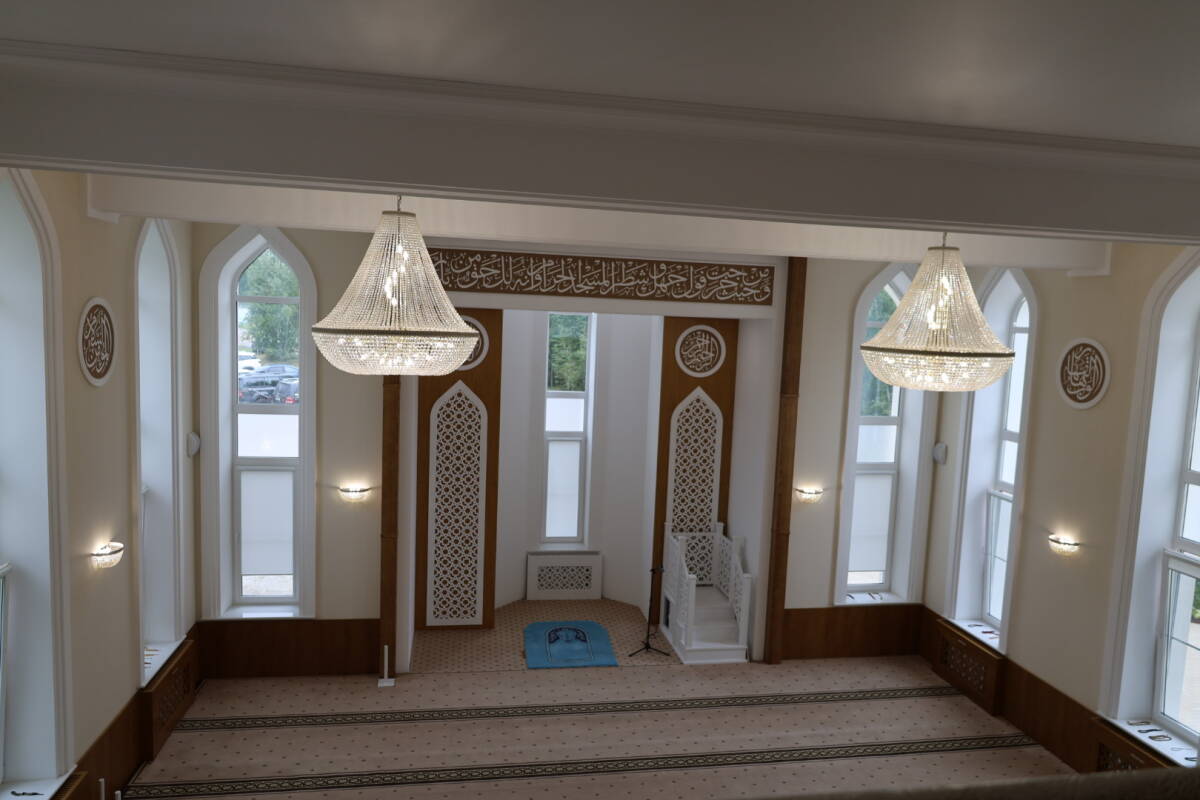
The mosque is located at the entrance to the city. Its building covers approximately 638 square metres and consists of two floors. According to published details, the first floor accommodates around 300 male worshippers, while the second floor can hold about 80 female worshippers. The complex can accommodate nearly 500 people during festivals and religious occasions under expanded arrangements.
From Foundation Stone to Opening
The story of the mosque began with the laying of the foundation stone on 6 January 2022, corresponding to 3 Jumada al-Akhirah 1443 AH, on the initiative of local businessman and philanthropist Anfar Minullin. A number of residents of the area took part in supporting the project.
The choice of 2022 as the starting year was not coincidental. It coincided with Tatarstan's commemoration of the 1,100th anniversary of the official conversion of the Volga Bulgars to Islam in 922 CE (310 AH), an event that represents a central milestone in the Islamic history of the Volga region.
On 9 September 2022, corresponding to 13 Safar 1444 AH, the crescent was raised on the mosque's minaret, a step that marked one of the most important stages in the completion of its construction. At that time, the project had become a prominent landmark in the Mirny neighbourhood of Zelenodolsk.
During Ramadan 1444 AH, corresponding to March and April 2023, the mosque hosted Tarawih prayers for the first time, before the remaining facilities and fittings were completed, leading up to its official opening in 1448 AH / 2026.
Not for Prayer Alone
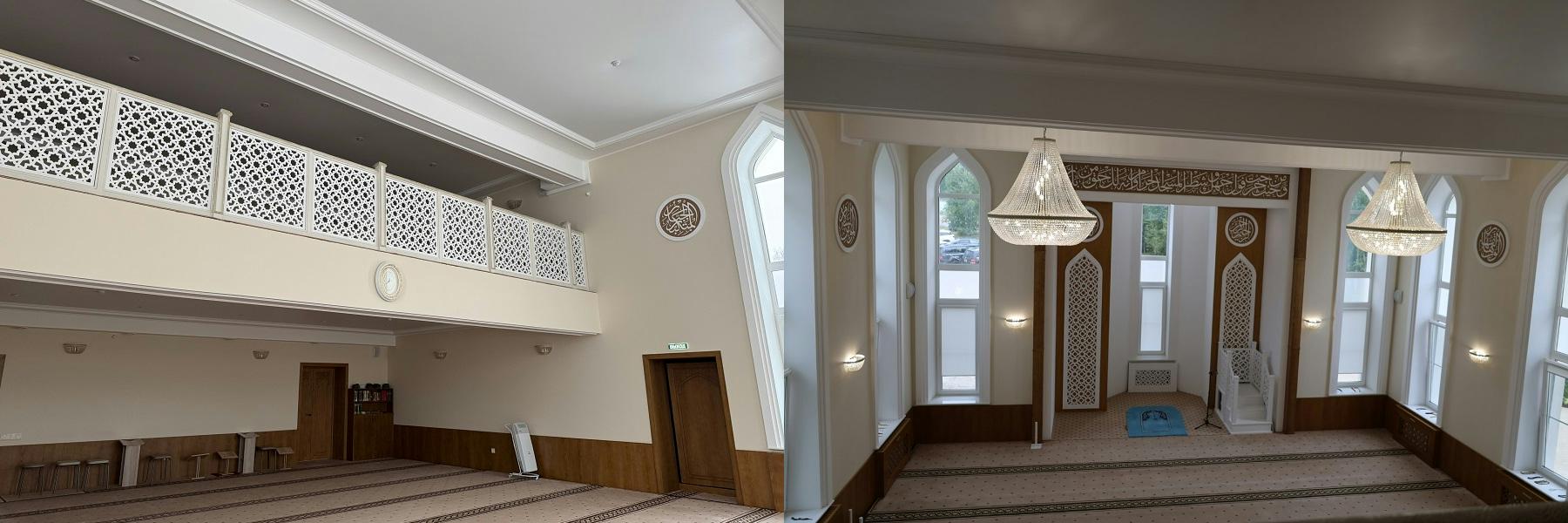
The mosque is designed to play a role beyond holding prayers. It includes three classrooms for teaching the basics of Islam, a library and an imam's room, which qualify it to serve as a centre for religious education and for serving Muslims in the area.
Separate ablution facilities for men and women, dedicated entrances, and water, electricity, heating and other essential services have also been provided.
A separate building has been erected in the mosque courtyard to host iftar meals and social and religious occasions, such as marriage contracts and gatherings. The area surrounding the mosque includes facilities for children and spaces for activities and recreation.
The complex also houses a funeral service facility for the preparation of the deceased and provision of the needs related to burial, which strengthens its role as a comprehensive centre serving the Muslim community rather than merely a building for prayer.
Tatarstan: A Thousand Years of Islam
The opening of the mosque comes within a broader historical context. Islam is not a recent phenomenon in Tatarstan; its roots in the region go back many centuries, to the official conversion of the state of the Volga Bulgars to Islam in 922 CE (310 AH).
Despite the political changes and campaigns the region experienced, particularly during the Tsarist and Soviet eras, the Tatars preserved a large part of their Islamic identity. The decades following the collapse of the Soviet Union saw the reopening and construction of mosques, madrasas and Islamic institutions.
From this perspective, the Al-Anjam Mosque represents not only a new building but another link in the journey of Muslims in Tatarstan to reclaim their religious institutions, and a continuation of an Islamic history that began on the banks of the Volga more than eleven centuries ago.


