


At least 50 people were killed and 58 others injured in an airstrike targeting a crowded market in the town of Kyauktaw in Rakhine State, western Myanmar. The attack drew reactions from the United Nations and prompted the Association of Southeast Asian Nations (ASEAN) to consider its repercussions, while fighting continues in the state, where the Rohingya Muslims live alongside other ethnic and religious communities.
The airstrike took place at noon on Monday, 28 September 2026, corresponding to 17 Rabi al-Akhir 1448 AH, in an area under the control of the Arakan Army, near a main market and the Kyisaban Nadi bridge in Kyauktaw.
The Arakan Army said that a warplane belonging to the Myanmar military dropped two bombs on the area, causing large numbers of casualties among shoppers, vendors, passersby and workers.
A local rescue official confirmed to the Associated Press that dozens had been killed and injured, while the Myanmar military did not issue a comment on the attack. News agencies were unable to independently verify all details of the airstrike.
A market serving the Rohingya and other groups
The airstrike carries particular significance given the nature of the area and the population that relies on the targeted market.
The United Nations said the market, which has more than 200 shops, serves multiple communities, including the Rohingya, the Rakhine, Hindus and the Daingnet.
Kyauktaw lies in Rakhine State, the historic homeland of the Rohingya Muslims, hundreds of thousands of whom have been displaced and forced to flee during successive waves of violence and military operations in the state.
Hundreds of thousands of Rohingya still live as refugees in Bangladesh and other countries, while those who remained inside Rakhine live amid the ongoing war between the Myanmar military and the Arakan Army, which controls large areas of the state.
The United Nations condemns
The airstrike prompted a swift reaction from the United Nations. Secretary-General António Guterres condemned the attack and called on all parties to the conflict in Myanmar to halt the violence, protect civilians and abide by international humanitarian law.
UN human rights chief Volker Türk said that reports concerning the airstrike raise "serious concerns" about respect for international humanitarian law.
The United Nations reiterated that the continuation of fighting, airstrikes and displacement in Rakhine means that conditions within the state remain unsuitable for the safe and sustainable return of refugees and displaced persons.
These warnings come at a time when the issue of the return of the Rohingya to Myanmar remains an increasingly contentious matter, particularly as some countries in the region continue attempts to return citizens of Myanmar to their country despite the war.
ASEAN moves after the airstrike
Several days after the attack, the matter moved to the regional level.
The Philippines, which currently holds the chairmanship of the Association of Southeast Asian Nations (ASEAN), expressed on Saturday, 3 October 2026, corresponding to 22 Rabi al-Akhir 1448 AH, its concern over the airstrike and the deaths, injuries and destruction it caused.
Manila said it is ready to facilitate consultations among ASEAN member states on how to assist Myanmar and deal with the repercussions of the attack.
The position represents a new development in the regional response to the airstrike, amid the association's continued failure to reach a settlement to the war that has engulfed Myanmar since the military coup of February 2021.
ASEAN had adopted the "Five-Point Consensus," which called for an end to violence, the start of dialogue among the parties and the delivery of humanitarian aid, but the war continued and widened in the following years.
Rakhine under the weight of an ongoing war
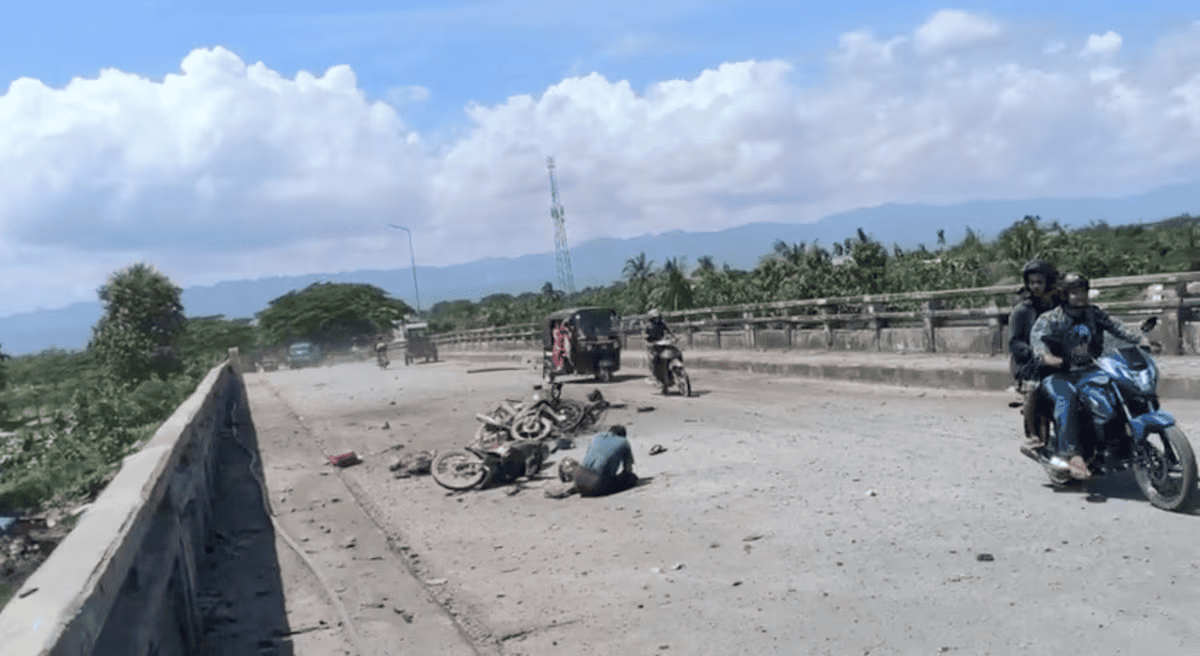
Rakhine is one of the most complex fronts of the war in Myanmar, after the Arakan Army managed to seize control of most of the state during its confrontations with government forces.
The fighting has led to new waves of displacement, shortages of food and medicine, and disruption of supply routes, while civilians face the risks of airstrikes, shelling and landmines.
The Rohingya find themselves in a highly precarious position amid this conflict: on the one hand they face the effects of military operations, and on the other the crisis of statelessness and the restrictions imposed on them remain unresolved.
The Arakan Army's control of most of the state also poses new challenges for the Rohingya, amid human rights reports and accusations of abuses against Muslim civilians during phases of the fighting, accusations the group has rejected in part.
As ASEAN considers the repercussions of the airstrike, the Kyauktaw market massacre has once again highlighted the situation of civilians in Rakhine, where the war continues to claim lives, while the safe return of hundreds of thousands of Rohingya refugees remains out of reach.


