


Hundreds of thousands of children in the Gaza Strip have returned to their desks for the first time in three years, but many of them have found not schools or classrooms in the usual sense, but temporary tents set up between displacement camps and rubble, amid widespread destruction that has affected educational facilities and acute shortages of seats, water and basic supplies.
According to a report published by Middle East Eye, around 500,000 students returned to education in the Gaza Strip with the start of the new academic year, including some 350,000 students in government schools and 150,000 in schools run by the United Nations Relief and Works Agency for Palestine Refugees (UNRWA).
The return comes after a widespread interruption of formal education since the outbreak of the war in 2023. The United Nations Children's Fund (UNICEF) estimates that some 700,000 students were deprived of formal education during this period.
Schools destroyed by war and classrooms inside tents
The educational environment to which the children have returned bears little resemblance to the one they knew before the war.
According to UNICEF, some 98% of schools in the Gaza Strip have been damaged, with around 80% directly hit. Remaining school buildings have also been turned into shelters for displaced people, which has greatly reduced the number of facilities available to resume classes.
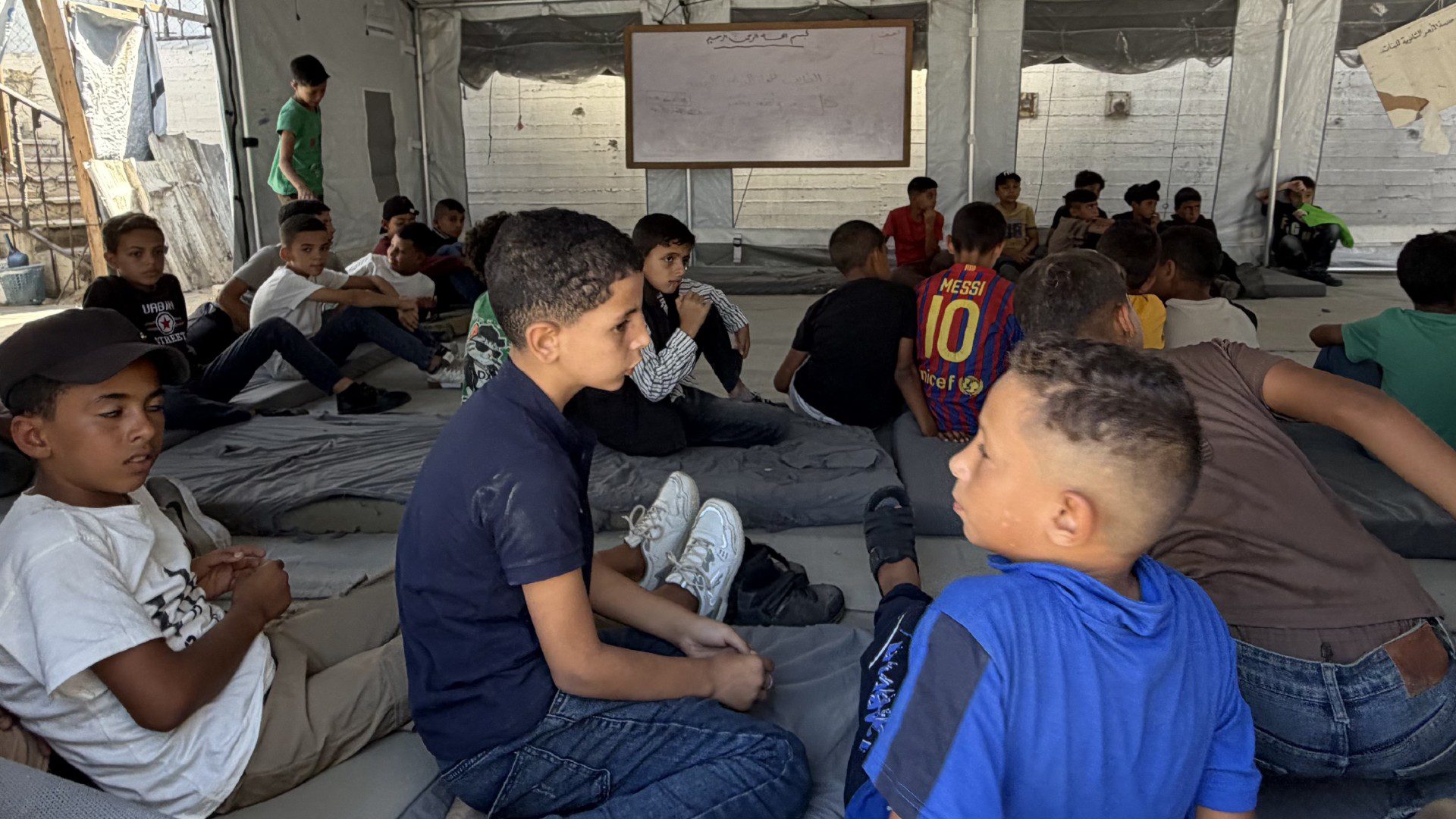
This has led the Ministry of Education, in cooperation with bodies including UNICEF and UNRWA, to set up limited classrooms inside shelters and tents made of plastic sheeting, many of which lack tables, chairs and basic services.
In one such classroom in the Kateeba area of the Al-Rimal South neighbourhood, south-west of Gaza City, seventh-grade students sit on thin mats on the ground, while the classroom contains only a large blackboard and a single chair for the teacher.
Among these students is Akram Hallas, 13, who has returned to school after long periods out of education.
His father, Mohammed Hallas, said his family still cannot believe that his son has finally been able to enrol in a school after what he went through during the years of war, explaining that Akram and his siblings had great difficulty following online education or enrolling in private schools.
Fear of shelling determines the choice of school
The problem is not limited to finding an available place to study, as families try to register their children at the nearest possible educational point to where they live.
Hallas said his family searched for a school close to their camp out of fear of sudden shelling, and because they want the children to stay close to them, in addition to the high cost of transport or its unavailability.
Families also face difficulty in buying even the most basic school necessities.
The father, who lost his job during the war and now helps his brother at a small stall, said he is no longer able to buy everything his three children need in terms of clothes, bags and stationery, and has been forced to limit himself to essentials.
Only three days of study per week
Given the huge shortfall in capacity, the Ministry of Education was compelled to adopt a rotation system.
According to the report, male students study on Saturdays, Mondays and Wednesdays, while female students study on Sundays, Tuesdays and Thursdays. The school day is also divided into three shifts in order to accommodate as many children as possible.
As a result, a student attends school no more than three days a week.
Even so, thousands of families are still unable to find places for their children.
Osama Eita, a father of two children aged eight and 11, says he has been unable to enrol them in a nearby free government school, while he fears sending them to distant areas because of the unstable security and social situation.
As for private schools, dozens of which have opened since the ceasefire of January 2025, they remain beyond the means of many families because of high fees.
Only 208 schools, and a need for three times that number
Figures from the Ministry of Education reveal the size of the gap facing the Strip.
Only 208 government schools have reopened, while the ministry says it needs roughly three times that number in order to accommodate all students.
The ministry is working with international partners to establish temporary schools and additional learning spaces, but the schools that have already begun operating face severe overcrowding and a shortage of equipment.
Wafaa Miqat, principal of the Gaza Municipality Preparatory School, says the school receives more than 350 students per shift, while the total number registered there exceeds 2,100 students.
All of them, however, have access to only four toilets.
The school also suffers from a water shortage and has no dedicated drinking water tank, while students lack tables, chairs and cupboards.
Winter threatens tent classrooms
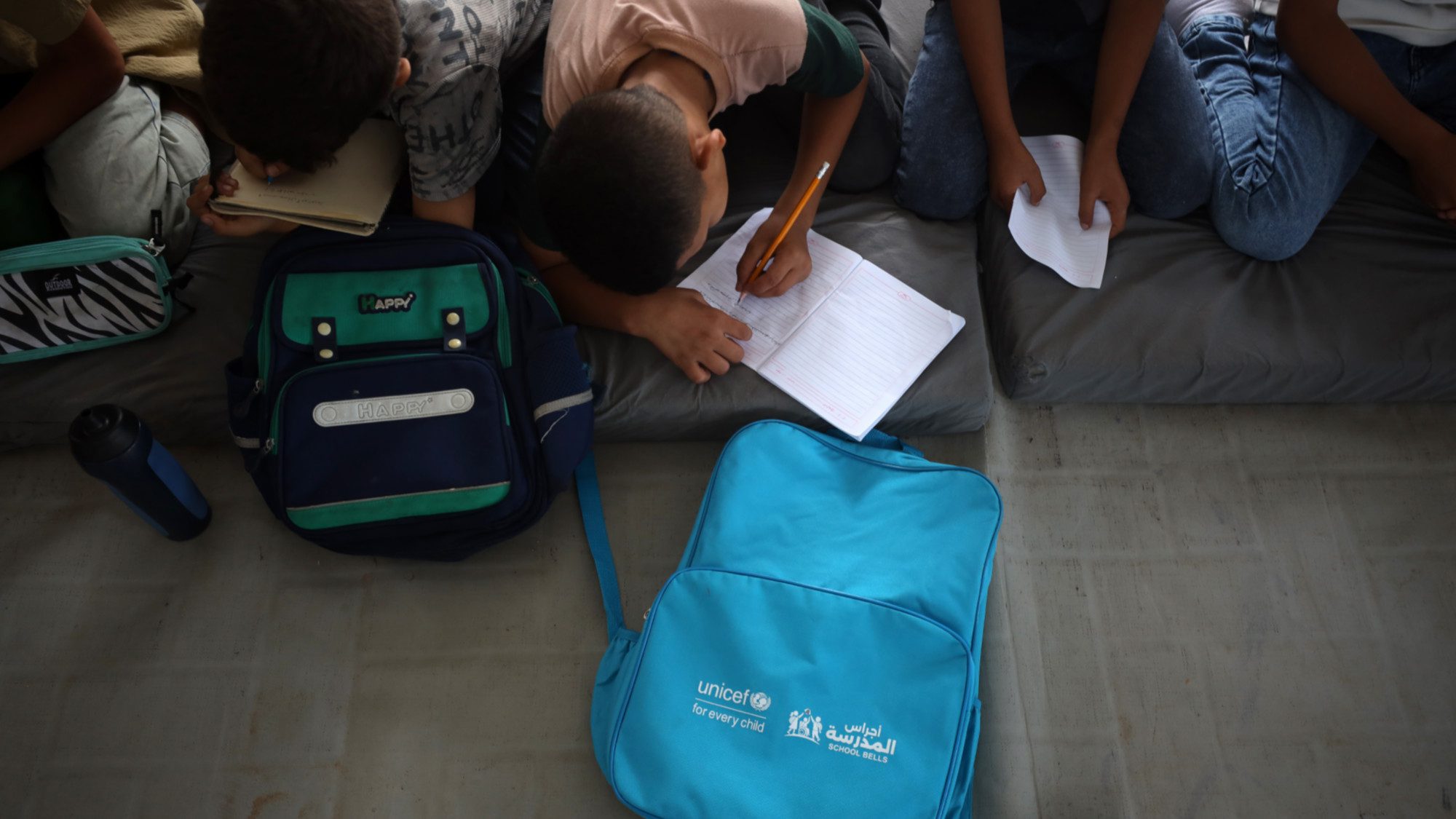
As winter approaches, another problem faces the temporary schools.
Classrooms set up inside tents have no electricity, and rainwater seeps into the floors during the winter, which sometimes forces students to get up from the mats on which they sit and follow their lessons standing.
These conditions add to the difficulty of the task facing teachers, who face not only the problem of teaching the curriculum but also try to make up for years of learning loss among children who lived for long periods away from school.
The school principal said that what is needed at this stage is to compensate for the lost educational skills and to close the gap that has built up among students, but the reality forces schools to deal at the same time with basic problems related to survival and services.
The Ministry of Education also points to a shortage of stationery and whiteboards, as well as the low financial compensation received by teachers, as additional obstacles to restoring the educational process.


