


Three decades ago, few would have imagined that Turkish-Israeli relations would reach the point they have reached today. The two countries, which in the 1990s forged a military and intelligence partnership described at the time as one of the strongest alliances in the Middle East, now trade public accusations and treat each other's movements as a direct threat to national security.
As the most intense round of the Iranian-Israeli confrontation that has shaken the region over recent months nears its end, a question has begun to emerge with a force it had not previously carried: Are Turkey and Israel heading toward a long-term strategic conflict? And could this conflict turn into direct military confrontation? The question sounds shocking, but it is no longer as impossible as it was a few years ago.
How the relationship was
When Turkey recognised Israel in 1949, it became the first Muslim-majority state to take this step, in a very different international context, as Ankara sought to secure its place within the emerging Western system after the Second World War.
In 1996, Ankara and Tel Aviv signed a broad military cooperation agreement that opened the door to joint training, intelligence exchange, and the modernisation of Turkish weapons by Israeli companies.
At that stage, Israel saw Turkey as a strategic gateway to the Islamic world, while Ankara viewed Israel as an important security partner that helped it face regional challenges, especially on the Kurdish file. But this phase did not last long.
The rise of Erdoğan: the beginning of a major shift
With the Justice and Development Party coming to power in 2002, Turkish foreign policy gradually began to change. Ankara no longer contented itself with its traditional role as a Western ally on the edge of the Middle East, and began to aspire to a more independent regional role.
Then came the Gaza war and the Davos forum incident in 2009, when President Recep Tayyip Erdoğan walked out angrily from a session that brought him together with Israeli President Shimon Peres, making that moment a symbol of a major shift in the political mood between the two sides.
But the real breaking point came in 2010 with the Mavi Marmara incident, when Israeli forces killed ten Turkish activists who were aboard a ship heading to Gaza. Since that date, relations have not returned to their former state despite repeated attempts at normalisation.
The Gaza war changed everything
If the Mavi Marmara incident damaged the relationship, the war on Gaza after October 2023 pushed it into a markedly different phase.
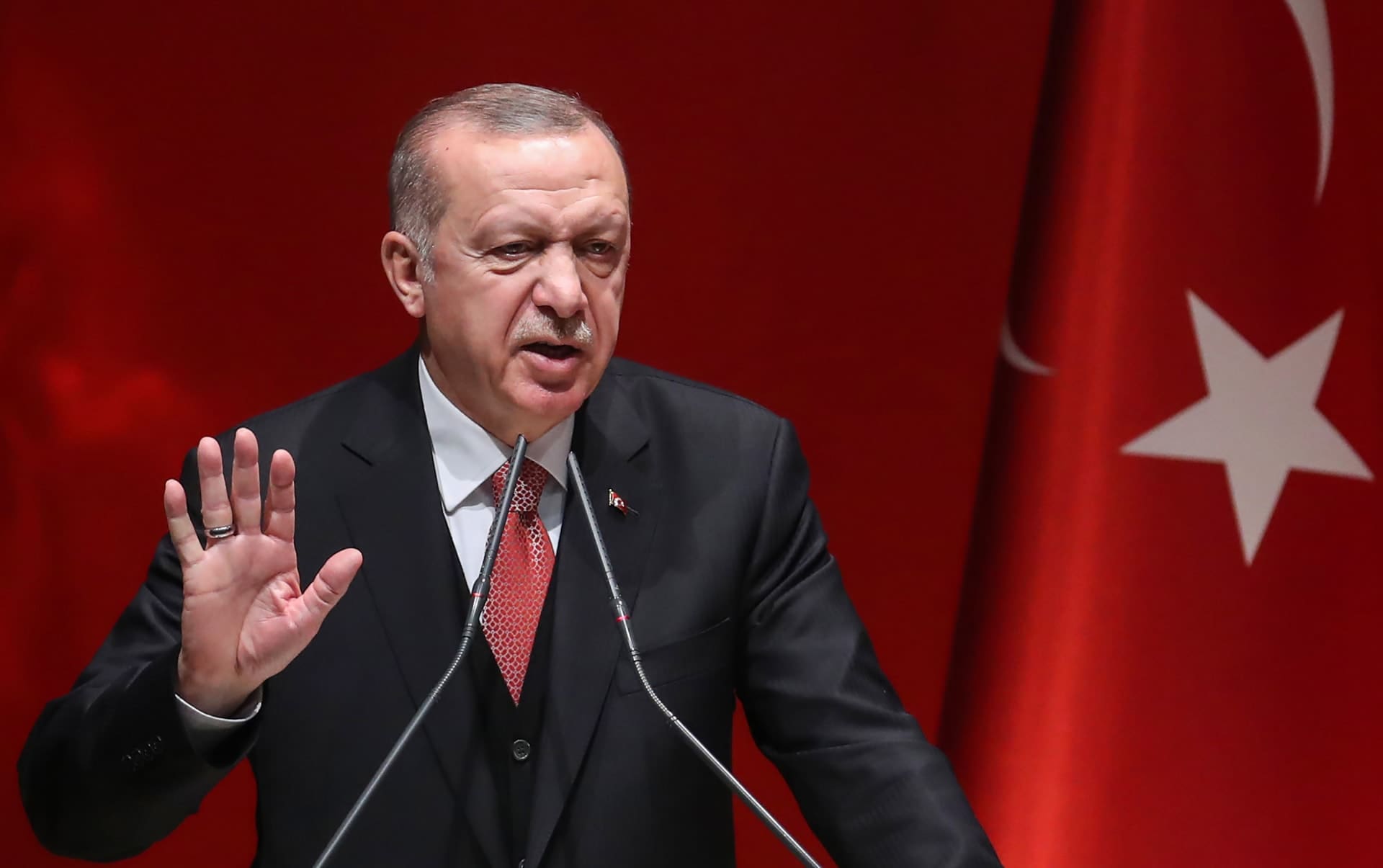
In Ankara, rhetoric toward Israel became harsher than ever, and Erdoğan considered that what is happening in Gaza has exceeded the limits of a conventional war into what he has repeatedly described as a "crime against humanity."
For its part, Israel accused the Turkish leadership of adopting hostile rhetoric and turning the Palestinian cause into a tool to enhance regional influence. But behind the exchanged statements, deeper transformations were taking place on the ground.
Syria: the most dangerous front
After the major changes Syria has witnessed in recent years, the Syrian file has become the most sensitive point of contact between the two sides.
Turkey views Syria as a direct extension of its national security, and has therefore strengthened its military and political presence in northern Syria, seeking to prevent the emergence of any armed Kurdish entity on its southern border.
Israel, meanwhile, focuses on preventing the return of Iranian influence and monitoring any military developments that could affect its security. The problem is that spheres of influence and interests have increasingly begun to intersect.
For this reason, Syria is now viewed within Israeli and Turkish security circles as one of the most important arenas of strategic competition between the two countries.
Eastern Mediterranean: the struggle over gas and influence
Away from the political noise, another battle is taking place beneath the sea. Since the discovery of huge gas fields in the Eastern Mediterranean, the region has turned into an arena of complex geopolitical competition.
Israel has strengthened its cooperation with Greece and Cyprus on energy and maritime security files, and has supported projects to transport gas to Europe away from Turkish territory.
For its part, Ankara sees these arrangements as aimed at marginalising it and excluding it from the new energy equations.
Therefore, Turkey views with concern any military or security cooperation bringing together Israel, Greece and the Greek Cypriot administration, considering that the matter goes beyond economics to a redrawing of the balance of power in the Eastern Mediterranean.
How does each side view the other?
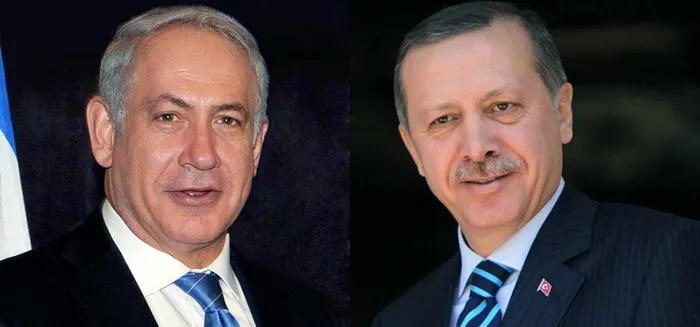
Notably, the shift is no longer only political. In Israeli media and security research centres, Turkey has increasingly begun to appear as a "competing power" or a "potential strategic adversary."
Conversely, Turkish political and security figures increasingly speak of Israel as part of a network of alliances aimed at containing Turkish influence in the region. This language did not exist with such clarity just a few years ago.
Comparing military strength
If the conflict moves from politics to military confrontation, the balance of power appears more complex than many believe.
The Turkish army has around 355,000 active personnel, in addition to hundreds of thousands of reserve forces, making it one of the largest NATO armies in terms of manpower.
Turkish defence industries have also made tremendous leaps over the last decade. Turkey has become a major producer of combat drones, and has developed domestic missiles, warships, and advanced electronic systems.
Israel, for its part, has a smaller army in numbers, but it is considered one of the most technologically advanced armies in the world.
Its arsenal includes dozens of F-35 stealth fighters, and multi-layered missile defence systems including the Iron Dome, David's Sling and Arrow, in addition to exceptional intelligence and cyber capabilities.
It is also widely believed that Israel possesses an undeclared nuclear arsenal.
Could war actually occur?
Amid all this tension, the chances of direct war may increase, despite the absence of a shared border between the two countries, as occurred in the recent Iran war. Confrontation would also be extremely costly for both sides.
Even if a confrontation does not take this form, experts do not rule out other forms of conflict, such as indirect military competition in Syria, cyber warfare, intelligence confrontations, maritime rivalry in the Eastern Mediterranean, and the use of local and regional allies as mutual leverage.
For this reason, many analysts speak of a "regional cold war" more than of a conventional war.
Where does the United States stand?
Washington remains the most influential factor in any equation involving Turkey and Israel. The United States considers Israel its closest strategic ally in the Middle East, and has provided it with unprecedented military and political support in recent years.
At the same time, Turkey is a pivotal member of NATO, and possesses the second-largest army in the alliance in terms of manpower.
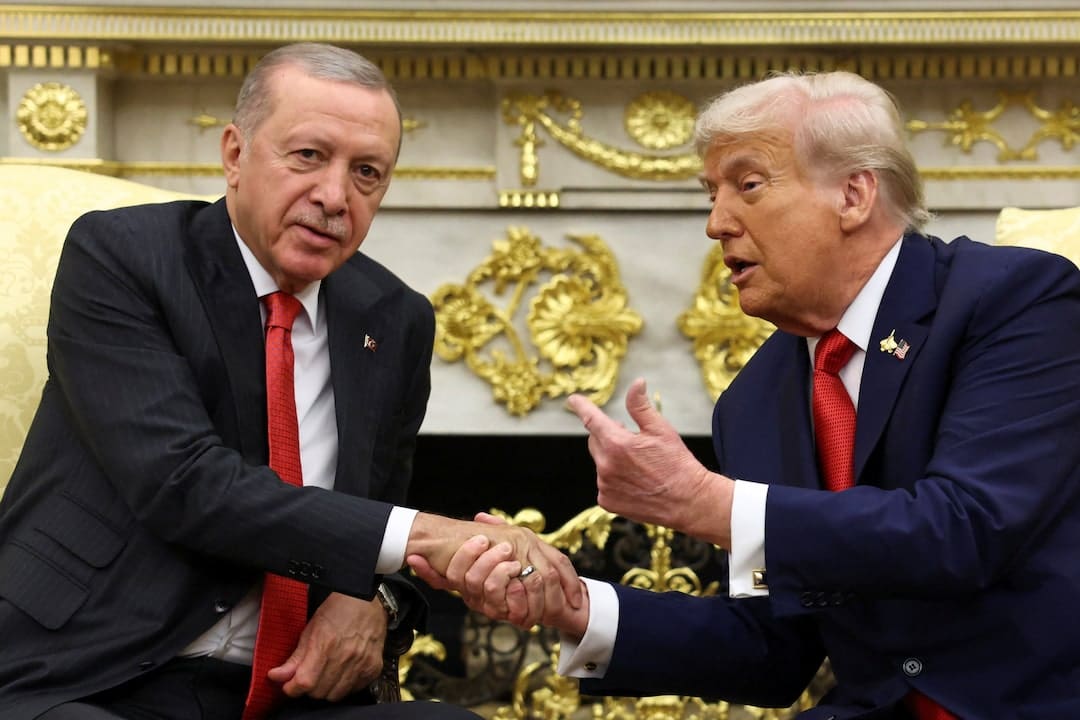
US President Donald Trump has, on more than one occasion, expressed appreciation for his personal relationship with Turkish President Erdoğan, and therefore any clash between Ankara and Tel Aviv would place Washington before an unprecedented dilemma.
It is difficult to imagine it abandoning Israel, and equally difficult to risk losing Turkey.
Therefore, most experts expect that the American role in any future crisis would be containment and prevention of an explosion, rather than full alignment from the outset.
A conflict that transcends the two countries
Ultimately, the current tension between Turkey and Israel is not a passing political disagreement or a temporary diplomatic crisis, nor merely an exchange of accusations and statements between Turkish President Recep Tayyip Erdoğan and Israeli Prime Minister Benjamin Netanyahu.
What is unfolding reflects a broader struggle over the shape of the future Middle East, and over maps of influence, energy, sea lanes, and military alliances. Turkey sees itself as a rising regional power seeking to protect its vital sphere from the Black Sea to the Eastern Mediterranean, Syria and Iraq.
Israel, for its part, regards itself as the region's most militarily and technologically superior power, and rejects any arrangements that might restrict its strategic freedom of movement.
Between these two visions, the outlines of a long-term confrontation are taking shape, one that may not develop into a full-scale war, but is likely to remain among the most dangerous flashpoints in the Middle East in the years ahead.


