


Thirteen years after the dispersal of the Rabaa al-Adawiya and al-Nahda sit-ins in Cairo, the aftermath of that day remains present in the Egyptian landscape, not only through the victims who fell during the dispersal, but also through tens of thousands of political detainees whom human rights organisations say remain in Egyptian prisons.
On the thirteenth anniversary of the massacre, the Families of the Egyptian Detainees Association (FEDA) called on the Egyptian authorities to release detainees held in connection with the Rabaa events, considering that resolving this file could represent a step towards closing a painful chapter in the country's history and opening the way to reconciliation and transitional justice.
Rabaa: A Wound That Has Not Closed
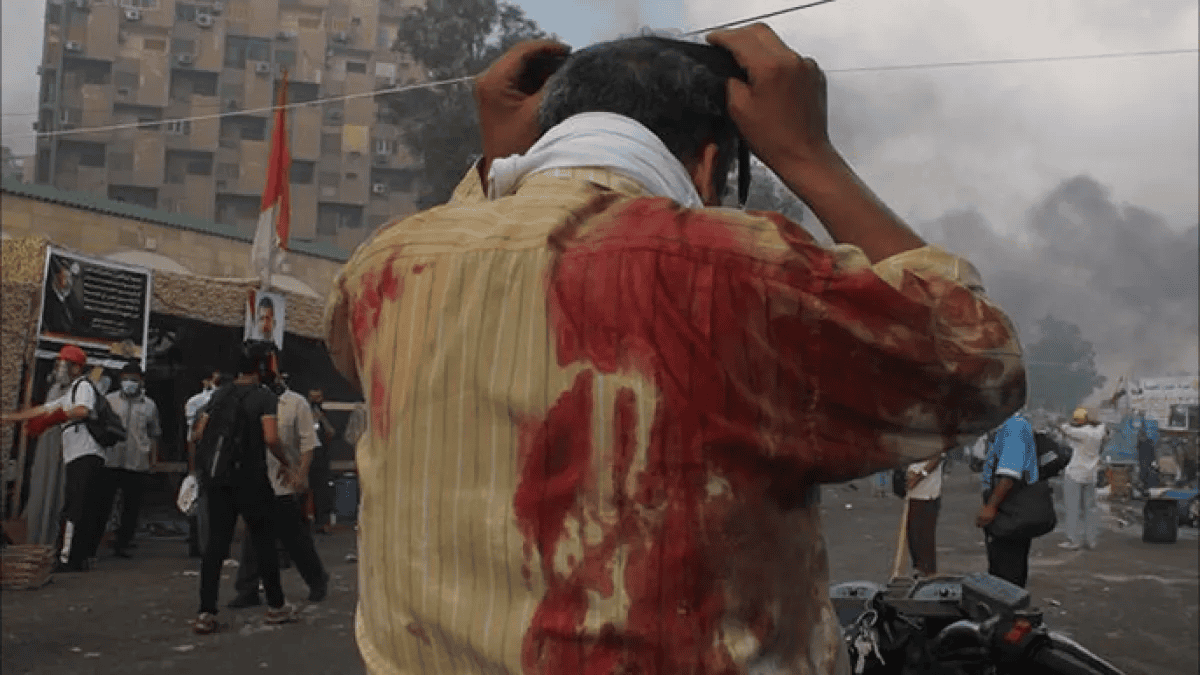
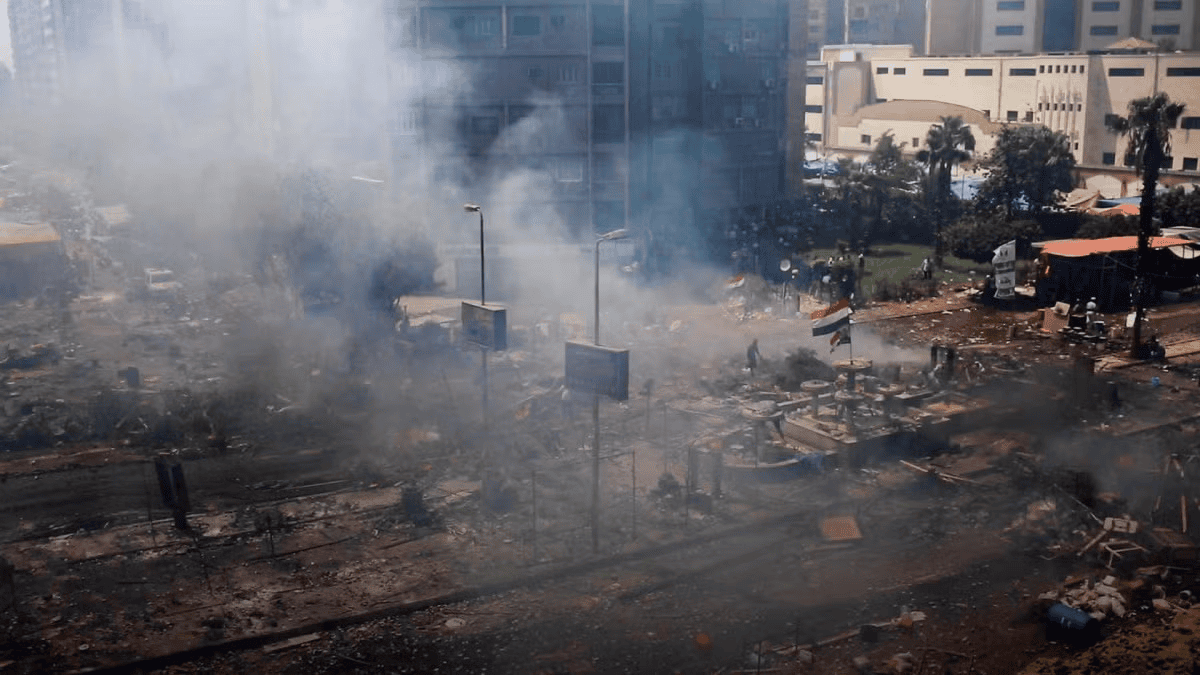
On 14 August 2013, Egyptian security forces stormed the Rabaa al-Adawiya and al-Nahda sit-ins, weeks after the removal from office of the elected Egyptian president Mohamed Morsi on 3 July of the same year.
Human rights organisations say the dispersal operation resulted in the killing of at least 900 demonstrators supporting democracy, while Human Rights Watch described what occurred as one of the largest killings of demonstrators in a single day in modern history.
The sit-in included supporters of Morsi and opponents of the military coup that ousted him, and the forcible dispersal turned into one of the bloodiest moments in modern Egyptian history.
But for the families of detainees, the Rabaa events did not end with the conclusion of the dispersal operation; trials and arrests continued afterwards, and large numbers of participants and defendants in the case became prisoners for many years.
From Victims to Defendants
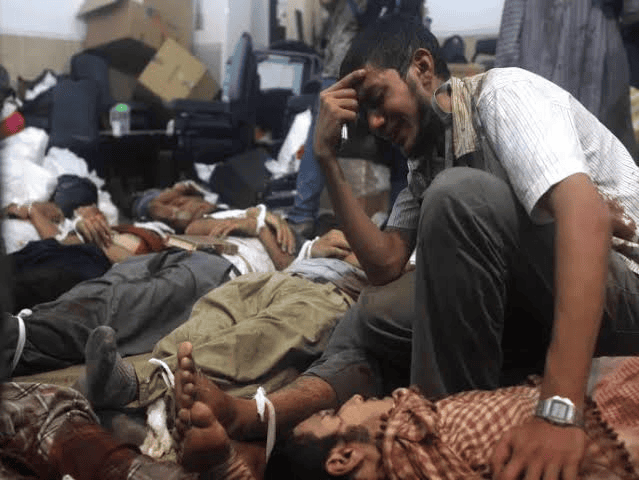
The Families of the Egyptian Detainees Association said that those who took part in peaceful sit-ins to express their political positions "turned from victims into defendants".
The association pointed to the referral of large numbers to trial in cases linked to the Rabaa events, including 51 defendants in the "Rabaa Operations Room" case and 739 defendants in the case relating to the dispersal of the Rabaa sit-in.
The association demands the release of those still detained in connection with these cases, considering this a first step towards addressing the file of political detainees more broadly.
Tens of Thousands Behind Bars
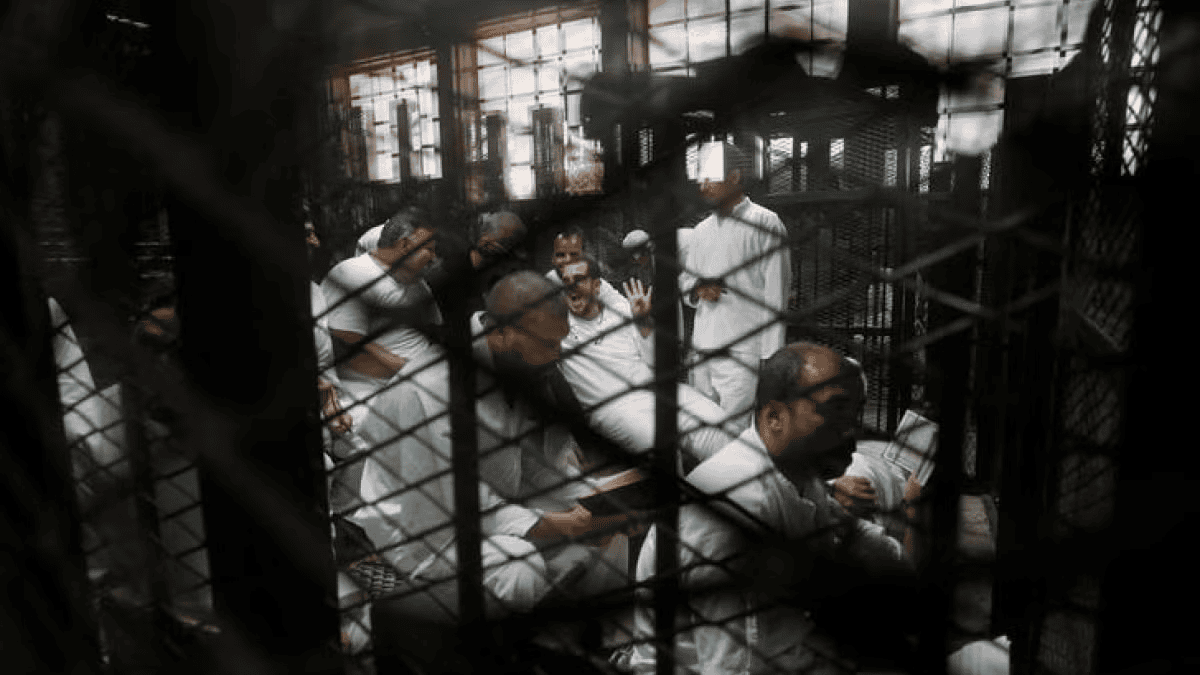
The detainee issue in Egypt is not confined to prisoners from the Rabaa events.
According to the Arab Network for Human Rights Information, the total number of prisoners in Egypt in March 2021 was approximately 120,000, including an estimated 65,000 political detainees, of whom at least 26,000 were in pretrial detention.
These figures, despite differing estimates among bodies, reflect the scale of the problem Egypt faces regarding prisons and political detainees.
Imprisonment Means More Than the Loss of Freedom
Human rights organisations say that conditions of detention in Egyptian prisons raise widespread concern.
Among the violations documented by human rights organisations: poor medical care, inadequate nutrition and ventilation, deprivation of family visits, overcrowded cells, and restrictions on access to books and newspapers and on exercise.
These organisations say these conditions become more dangerous for detainees suffering from chronic illnesses or requiring regular medical care.
A number of political figures have also died inside prisons or after being subjected to harsh conditions of detention, most prominently former Egyptian president Mohamed Morsi, who died during a court session in 2019 after years of detention.
Promises of Human Rights Reform, and Unanswered Questions
In September 2021, Cairo launched the National Human Rights Strategy, which included objectives relating to the rights of prisoners, humane treatment, protection from torture and ill-treatment, strengthening judicial oversight of prisons, and inspection of detention conditions.
However, human rights organisations say that the continued complaints concerning prison conditions and political detention raise questions about the extent to which these commitments are being implemented on the ground.
Here a gap appears between the declared framework and actual policy: the existence of an official human rights strategy does not end the problem unless its provisions are reflected in the conditions of the detainees themselves.
Transitional Justice: A Deferred File
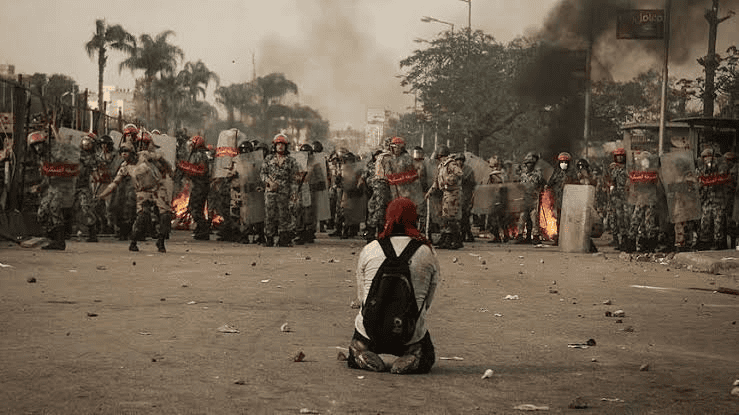
The Families of the Detainees Association raises a matter that goes beyond merely releasing particular prisoners, calling for a comprehensive path to reconciliation and transitional justice.
The association relies on Article 241 of the Egyptian constitution, which stipulates that the House of Representatives shall enact a transitional justice law guaranteeing the revelation of truth, accountability, reconciliation and compensation of victims.
This proposal places the state before a deeper question: how can the legacy of years of political conflict and violations be addressed without confronting the past, uncovering its circumstances and providing redress to its victims?
Transitional justice, in its broader concept, does not mean taking revenge against a political side; it requires mechanisms for uncovering the truth, holding those responsible for violations accountable in accordance with the law, compensating victims, and creating conditions that prevent the recurrence of violations.
13 Years On, the File Remains Open
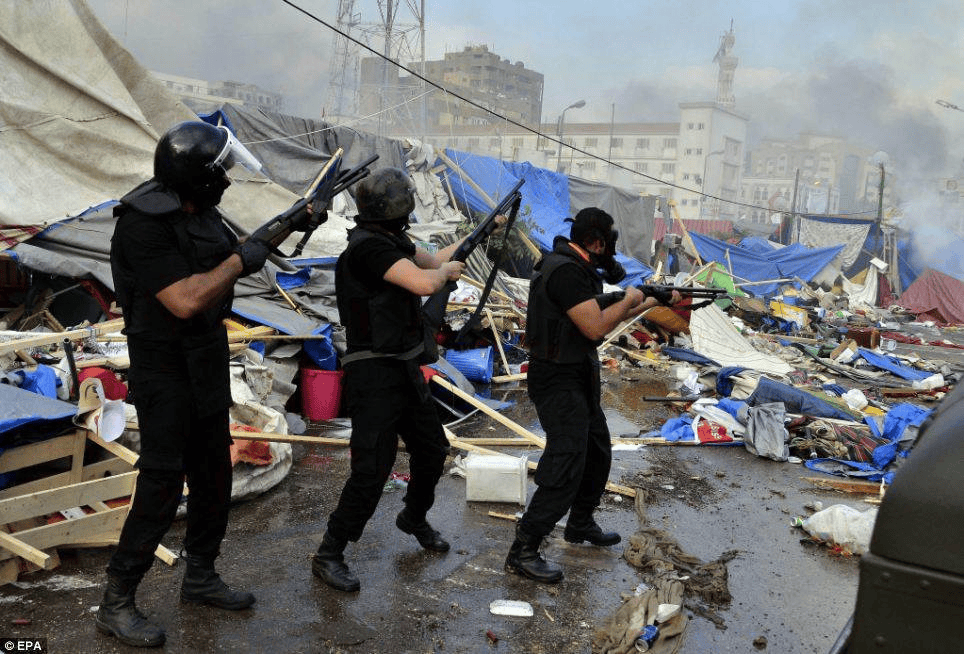
Thirteen years after Rabaa, the case remains one of the most sensitive files in Egypt.
On one hand, the Egyptian government says it has for years been confronting groups and organisations that threaten state security, while human rights organisations maintain that counterterrorism does not justify arbitrary detention, mass trials, or the deprivation of detainees of their basic rights.
Between the two narratives, the families of detainees remain facing a long reality of waiting.
Fathers and mothers awaiting their sons, children who grew up far from their fathers, and detainees who have spent years behind bars without their files being finally closed.
This is why the call by the Families of the Detainees Association on the anniversary of Rabaa went beyond demanding the release of a specific group of prisoners, extending to a demand for a comprehensive path that ends the file of political detention and leads to national reconciliation and transitional justice.
Rabaa: From the Memory of Blood to the Question of the Future
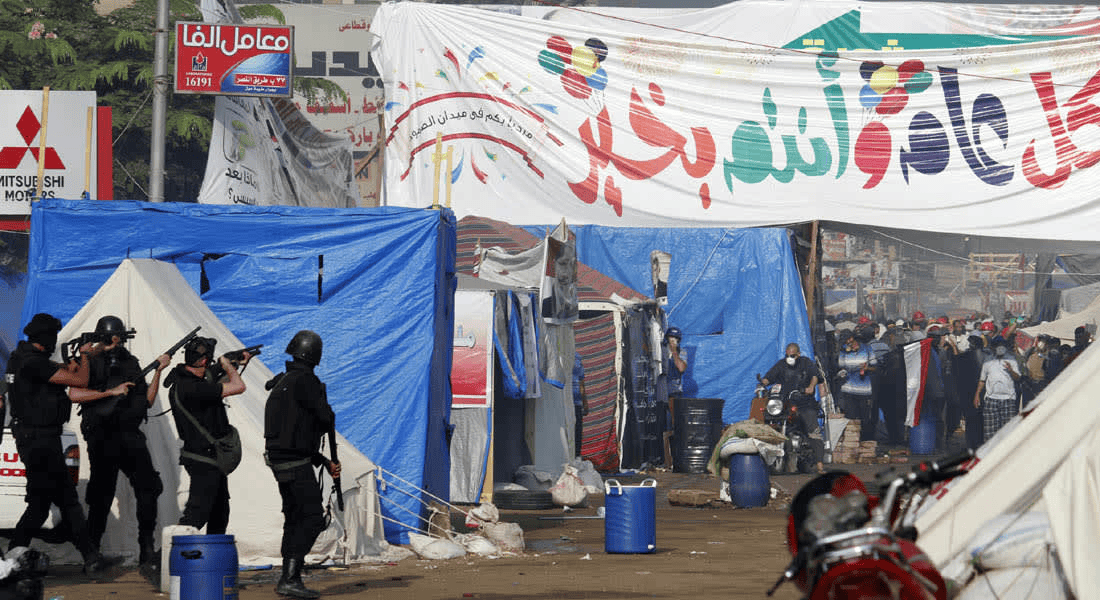
Years may pass, but events that left thousands dead and a wide wave of arrests do not disappear simply with the passage of time.
The question posed by the thirteenth anniversary is not only: what happened at Rabaa?
But also: can Egypt open a new page without addressing the legacy of that period?
For the families of detainees, the answer appears clear: genuine reconciliation cannot be achieved without releasing those still in prison because of their political positions, revealing the truth about the violations, and providing redress to the victims.
For the state, ending this file could be a test of its ability to move from a phase of political and security conflict to a broader phase of national reconciliation.
Thirteen years later, Rabaa remains not merely a date on Egypt's political calendar, but an open file in which justice, freedom, human rights and the future of the relationship between the state and its opponents intersect.


