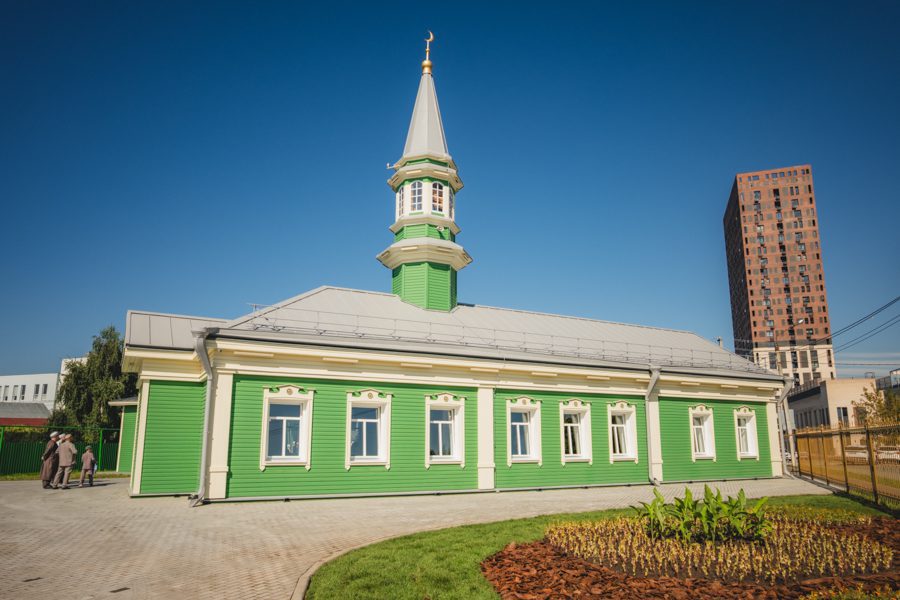
After more than a century since its founding, the historic Rajab Mosque in the city of Kazan, capital of the Republic of Tatarstan, has regained its original features and reopened its doors following extensive restoration works that lasted about five years. The step has restored to the city one of the most prominent surviving witnesses to the history of its Tatar Muslim community.
The mosque's reopening after restoration took place on 25 August, attended by the President of the Republic of Tatarstan, Rustam Minnikhanov, the Mufti of Tatarstan, Kamil Samigullin, the Mayor of Kazan, Ilsur Metshin, and a number of imams and officials.
The Rajab Mosque is of particular importance as the only surviving historic wooden mosque in Kazan from the period before the Russian Revolution. It is also classified among cultural heritage sites of regional significance.
A Mosque for Tatar Muslim Workers
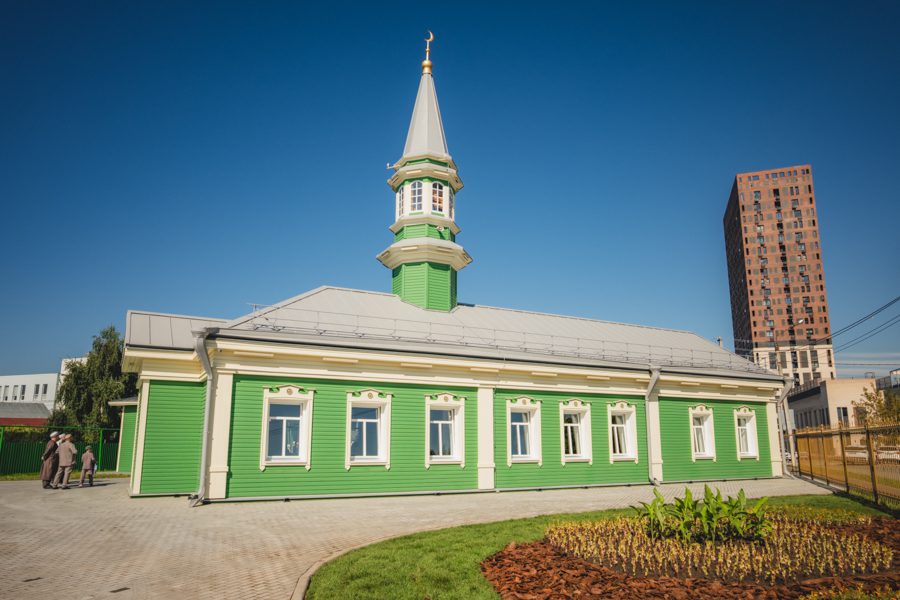
The mosque's story dates back to 1897 (1314–1315 AH), when it was built in the Yagodnaya Sloboda area to serve Tatar Muslim workers at the Alafuzov linen-spinning factory.
Local historical accounts indicate that more than 300 workers applied for a nearby place where they could perform their daily prayers and Friday prayers, before a building was allocated to them that later became a mosque. It was built in the traditional Tatar architectural style, becoming part of the religious life of Muslims in the area.
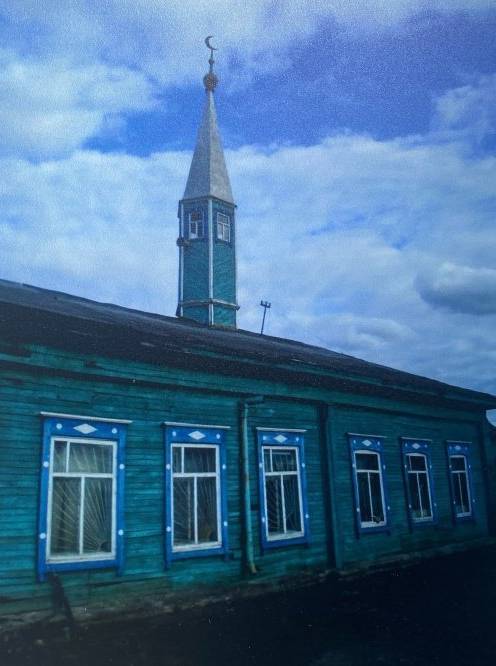
The mosque's journey through the twentieth century was not stable. In 1930 (1348–1349 AH) it was closed during the Soviet era, and the building was later used for non-religious purposes, including a nursery and housing. It was also exposed to a fire and architectural alterations. In 1993 (1413–1414 AH) the building was returned to Muslims, and in 1996 (1416–1417 AH) it was classified as a cultural heritage site in Tatarstan.
Five Years to Restore Its Features
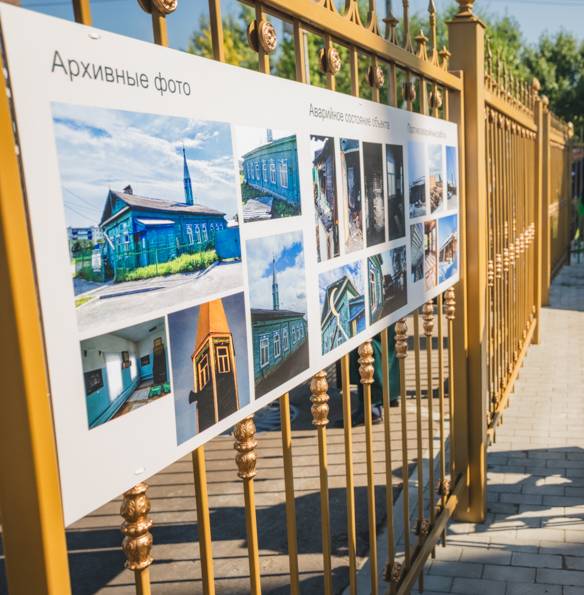
The comprehensive restoration project began in August 2021 (Dhu al-Hijjah 1442 AH – Muharram 1443 AH) on the initiative of the mosque's regular worshippers. The reconstruction drew on historical documents and photographs in an effort to return the mosque to its original form as far as possible.
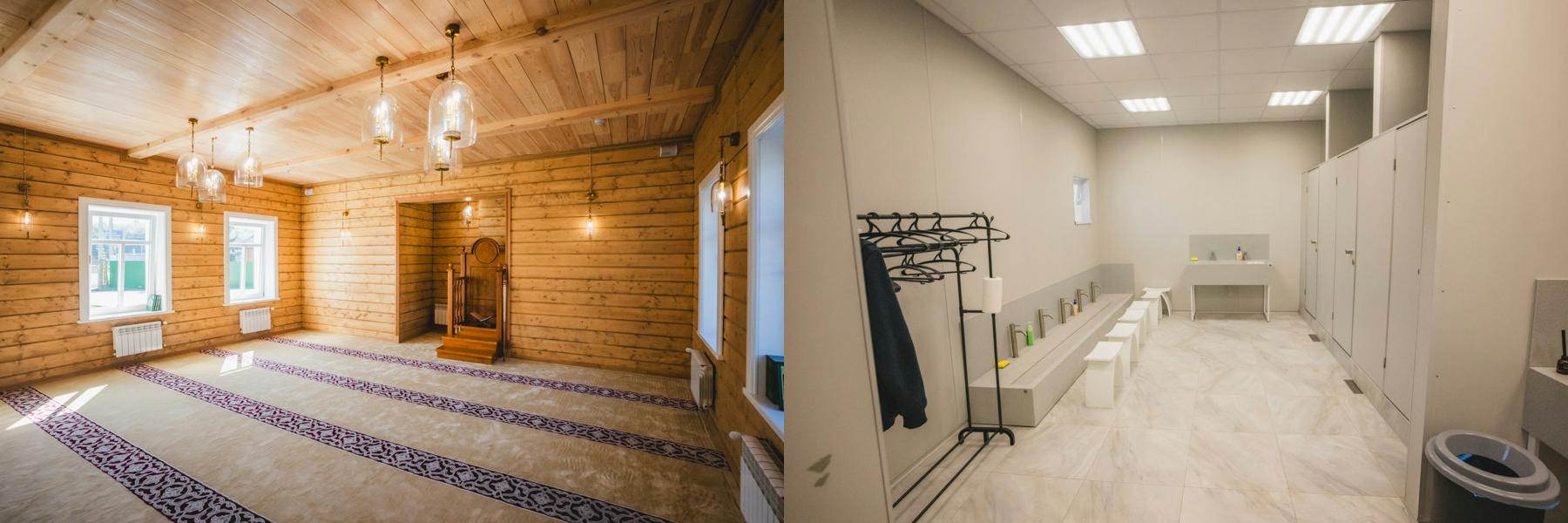
The works included repairing the foundations, the wooden frame, the roof and the minaret, and restoring the decorations, windows and architectural elements, in addition to renewing the pulpit and the interior and exterior finishes.
The mosque was also equipped with fire alarm, surveillance and sound systems, and new ablution facilities were built for men, women and persons with disabilities, along with water and drainage networks and the walkways surrounding the building. Its current capacity is about 200 worshippers.
Local reports stated that a large part of the reconstruction works was funded by donations from worshippers and benefactors.
A Witness to the History of Islam in the Volga Basin
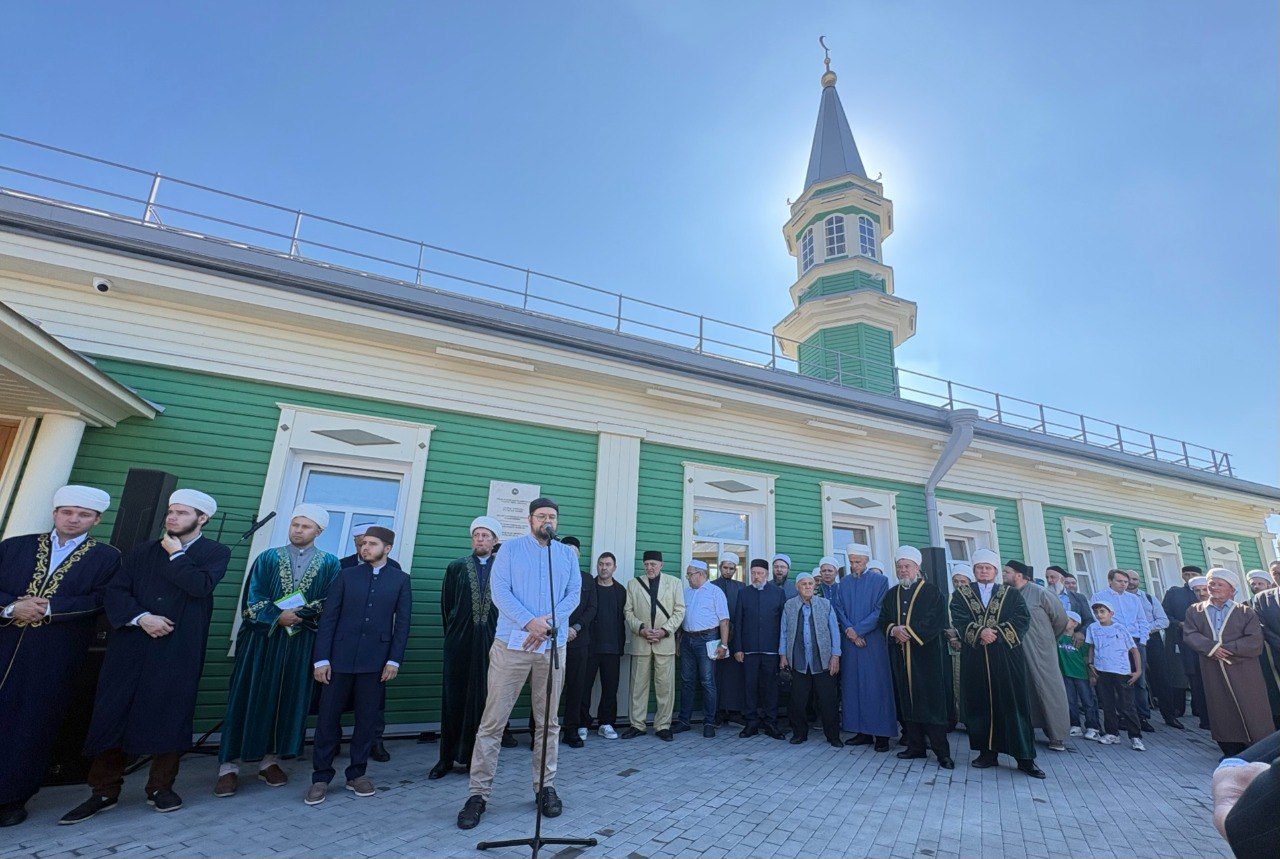
The importance of the Rajab Mosque lies not only in its age or its wooden architecture; it is part of a broader Islamic history in Tatarstan and the Volga River basin, a region where the organised presence of Islam extends back more than a thousand years.
The Volga Bulgars officially adopted Islam in 922 (310 AH), and the region later became one of the most important centres of Islamic civilisation in northern Eurasia. The Tatars preserved their Islam and their identity despite the major political transformations the region went through.
Thus, the survival of a wooden mosque from the late nineteenth century in central Kazan represents not merely the preservation of an historic building, but the recovery of part of the Islamic memory of the Tatars, after decades that witnessed the closure of mosques and the decline of religious activity during the Soviet era.
Now, 129 years after its founding, the Rajab Mosque returns to the scene in Kazan as a witness to the history of a Muslim community that has preserved its faith and memory across generations, and to a new phase of reviving historic Islamic landmarks in Tatarstan.