


The airborne assault carried out by Israeli occupation forces in southern Lebanon last week recalled similar operations the region has witnessed in recent years.\
Over the past half-century, airborne operations have played a central role in the military strategy adopted by the United States and Israel in the wars and military operations they waged across the Muslim world. These operations range from parachute drops behind enemy lines, to air assaults by helicopter, to airborne landings at airports.
US Airborne Operations
Somalia – Battle of Mogadishu (1993) – known as "Black Hawk Down"
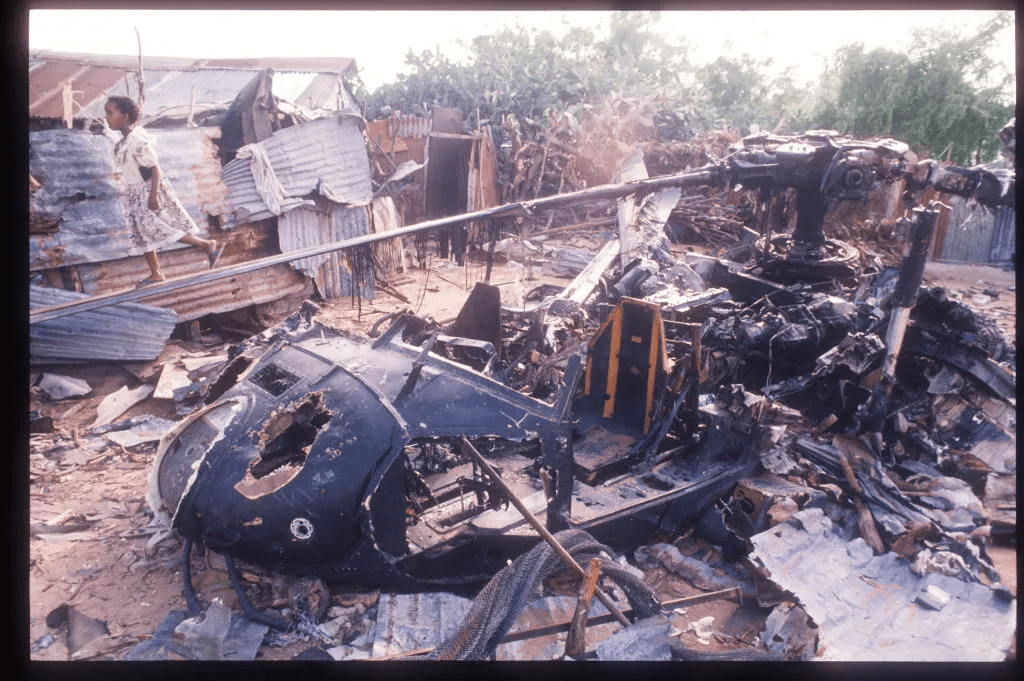
This operation is by far the most famous symbol of American failure in the 1990s.
Date: 3–4 October 1993.
The objective of the operation was to capture leaders of the Somali armed groups led by General Mohamed Farrah Aidid in Mogadishu.
The force tasked with carrying out the operation was the Task Force Ranger, which included units of the Rangers and Delta Force.\
Course of the operation: The landing was carried out by Black Hawk helicopters in a densely populated area. The operation quickly failed when two helicopters were shot down with RPG rounds. What was meant to be a quick capture turned into a violent street battle that lasted through the night.
The outcome: a disastrous defeat in which the US military was crushed. 18 American soldiers were killed and dozens wounded, and the bodies of American soldiers were dragged through the streets of Mogadishu, leading to the full withdrawal of the US military from Somalia.\
This battle is considered a military reference in the teaching of urban warfare.
The War in Afghanistan (2001–2021)
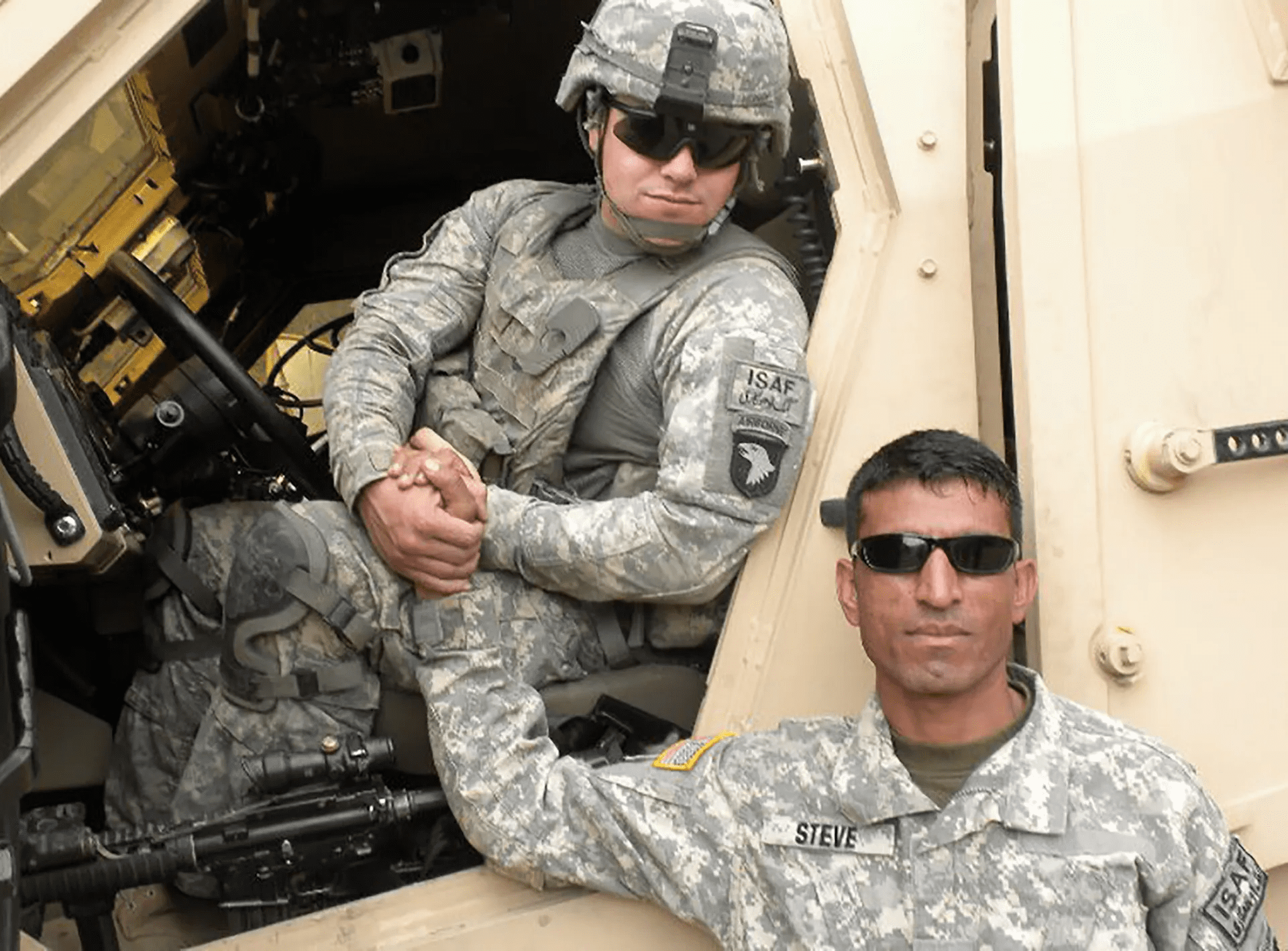
Since the beginning of the US invasion of Afghanistan on 7 October 2001, which the US military named Operation Enduring Freedom and which former US President George W. Bush described as a crusade, US forces relied heavily on airborne operations in Afghanistan's rugged terrain. These operations included:
Air assaults by Black Hawk and Chinook helicopters to target leadership hideouts and pursue al-Qaeda elements.
The use of advanced bases in the mountains that could only be reached by air.
In Afghanistan, the model was not the landing of whole brigades by parachute, but reliance on small Special Forces teams inserted behind enemy lines to direct air strikes and work with the Northern Alliance.
Operation Enduring Freedom – Insertion of Special Forces Teams
Date: began on 19 October 2001, 12 days after the start of the air campaign.
Objective: to act as liaison and air-strike direction team with the forces of the Northern Alliance to help them defeat the Taliban movement.
The execution was entrusted to Special Forces A-Teams ("six-man teams") of the US Army Special Forces (Green Berets).
Size of forces: The operation began with the insertion of small teams. For example, Tiger 01 consisted of 6 personnel.
Details of execution: These teams were inserted by special MH-53J Pave Low helicopters of the 160th Special Operations Aviation Regiment. The teams travelled with Northern Alliance commanders such as General Abdul Rashid Dostum, and used laser target designators to mark Taliban targets (tanks, artillery, positions) for destruction by US aircraft (B-52, F/A-18, AC-130).
Outcome: A major strategic success in the early years of the war. Despite their small size, these teams had a significant impact. Within weeks, Taliban fronts collapsed. For example, Tiger 01 contributed to the destruction of 29 tanks in the attack on Kabul alone. On 13 November 2001, Kabul fell. By 7 December, the Taliban government had collapsed completely and all its forces had retreated to the mountains.
This model demonstrated that combining Special Forces, precision air power and a large force of local allied troops could achieve a rapid victory.
Operation Commando Wrath in Shok Valley (2008)
Date: April 2008.
In Shok Valley, northeastern Afghanistan.
Objective: to kill or capture a senior Taliban military commander, "Mullah Omar", who was believed to be present in a village within this rugged valley. Intelligence classified this target as no less important than Osama bin Laden.
Elements of the 3rd Special Forces Group of the US Army took part in the operation, together with commandos from the army that the United States established after entering Afghanistan.
Number of soldiers: Sources refer to the landing of "elements" of the 3rd Group, with no confirmed information from the American side about their number.
Course of the operation: As soon as the American forces and their allied units began to advance, they fell into a well-planned ambush by militants positioned in the high mountains and on rooftops. The forces found themselves trapped under heavy fire from all directions.
Dozens of American soldiers fell among the dead and wounded.
The battle lasted several hours before the remaining American forces were able to withdraw.
Strategic Failure – Diversion of Resources from Afghanistan to Iraq (2002)
This was not the failure of a single operation, but a strategic failure resulting from the redirection of Special Operations resources and advanced aircraft from one theatre (Afghanistan) to another (Iraq).
Background: In spring 2002, while Operation Enduring Freedom in Afghanistan was in full swing and achieving successes against al-Qaeda, the US command began withdrawing elite units and advanced equipment in preparation for the invasion of Iraq.
Forces and equipment withdrawn:
5th Special Forces Group: the unit specialising in the Middle East, whose soldiers speak Arabic, was replaced by the 3rd Group (specialising in Africa and French-speaking), creating a large cultural and communication gap with the Afghans.
Predator unmanned aircraft: which had been very successful in monitoring and eliminating al-Qaeda leaders, were redirected to the theatre of operations in Iraq.
RC-135 electronic reconnaissance aircraft: were also withdrawn.
Outcome: a failure to exploit the initial success. According to experts and former officials (such as Flint Leverett, former Middle East director at the National Security Council), this sudden shift of resources gave the Taliban movement a valuable opportunity to regroup, reorganise and hide in rugged areas and redeploy, prolonging the war for another decade and a half and draining the US army until its withdrawal from Afghanistan.
Invasion of Iraq (2003)
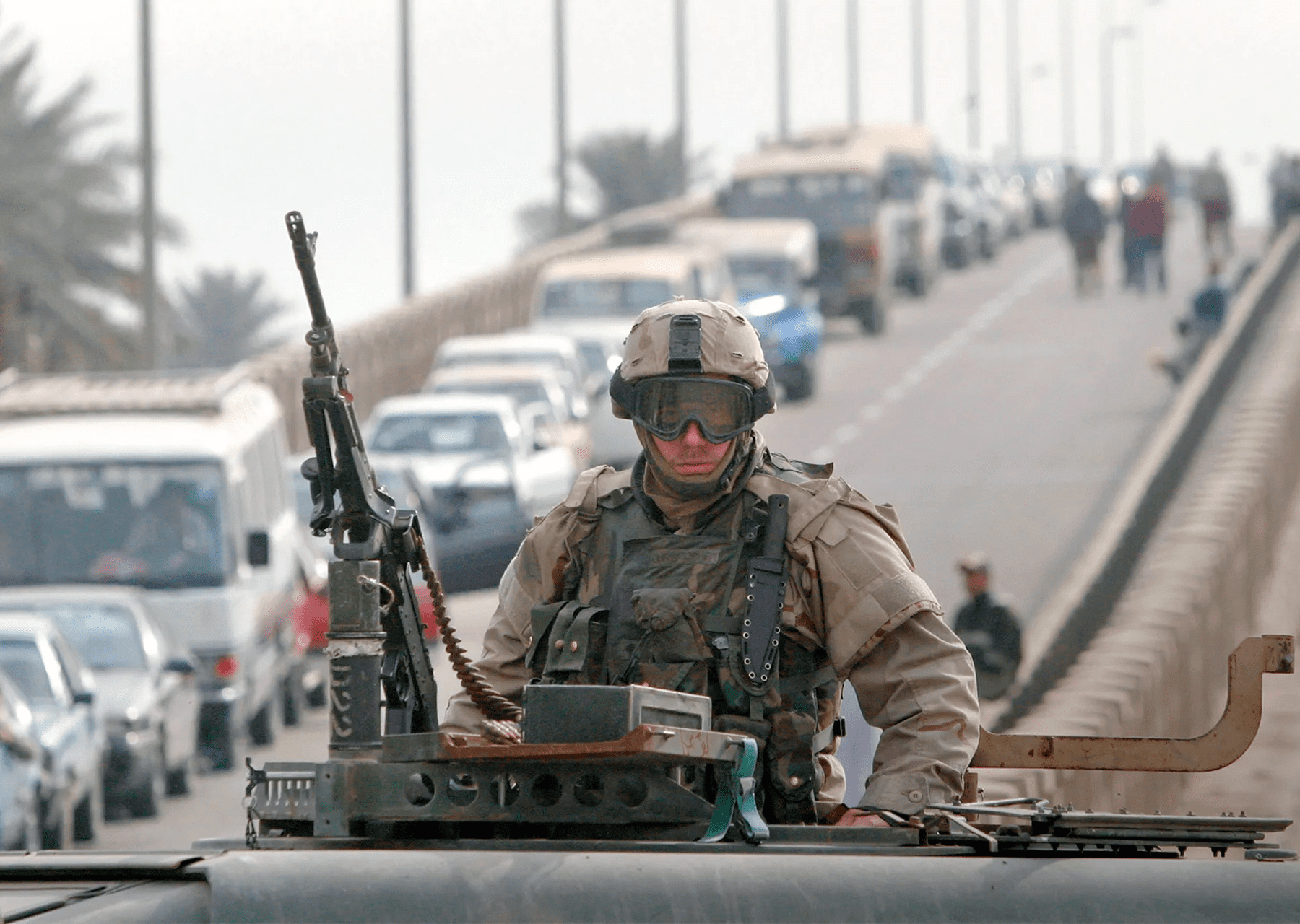
Airborne operations were a decisive element in the invasion of Iraq in 2003. In the first days of the war, US forces carried out airborne landings in western Iraq to seize strategic air bases and prevent the launch of Scud missiles toward Israel and Jordan. Forces were also landed deep within the main cities to support the rapid advance of ground forces.
The Northern Landing Operation
Because Turkey refused to allow US forces to cross its territory to open a northern front, the US command resorted to a massive airborne operation to establish this front. The operation consisted of two main phases:
- Operation "Northern Delay" – parachute landing
This is the main and most famous mass parachute landing of the war.
26 March 2003.
Force carrying it out: the 173rd Airborne Brigade.
Number of soldiers: 996 paratroopers jumped from C-17 aircraft. Some sources put the number at more than 1,000 soldiers.
The landing took place at night in an area already under the control of Kurdish Peshmerga forces and US Special Forces, meaning that resistance was nonexistent. The aim was to secure the airfield to receive heavy reinforcements.
The airfield was secured with no significant losses among the paratroopers during the landing. This success paved the way for the next and more important phase.
- Operation "Airborne Dragon" – armour landing
This operation was unique and is considered the first airborne landing of American armoured forces in history.
Date: 7 April 2003.
Its objective was to reinforce the forces of the 173rd Airborne Brigade with heavy armour to form a force capable of defeating Iraqi forces in the north.
Force carrying it out: Task Force 1-63 of the 1st Battalion, 63rd Armor Regiment.
Forces and equipment: The reinforcements were transported by air aboard C-17 aircraft.
It achieved complete success. After these reinforcements arrived, the joint US forces and the Peshmerga were able to eliminate organised Iraqi resistance in the north within just three days (by 10 April). Most importantly, the presence of this force in the north forced six Iraqi divisions to remain there to defend the northern front, preventing them from withdrawing to fight the US forces advancing from the south toward Baghdad. This significantly eased the pressure on the main forces and reduced losses.
The Raid in Pakistan (2011)
On 2 May 2011, US Special Forces carried out a helicopter-borne air assault inside Pakistani territory in the city of Abbottabad, which the US military said resulted in the killing of al-Qaeda leader Osama bin Laden. This operation is considered a model of surgical operations that rely on direct air insertion behind enemy lines without conventional ground support.
Notable Israeli Airborne Operations
- Operation "Entebbe" (1976)
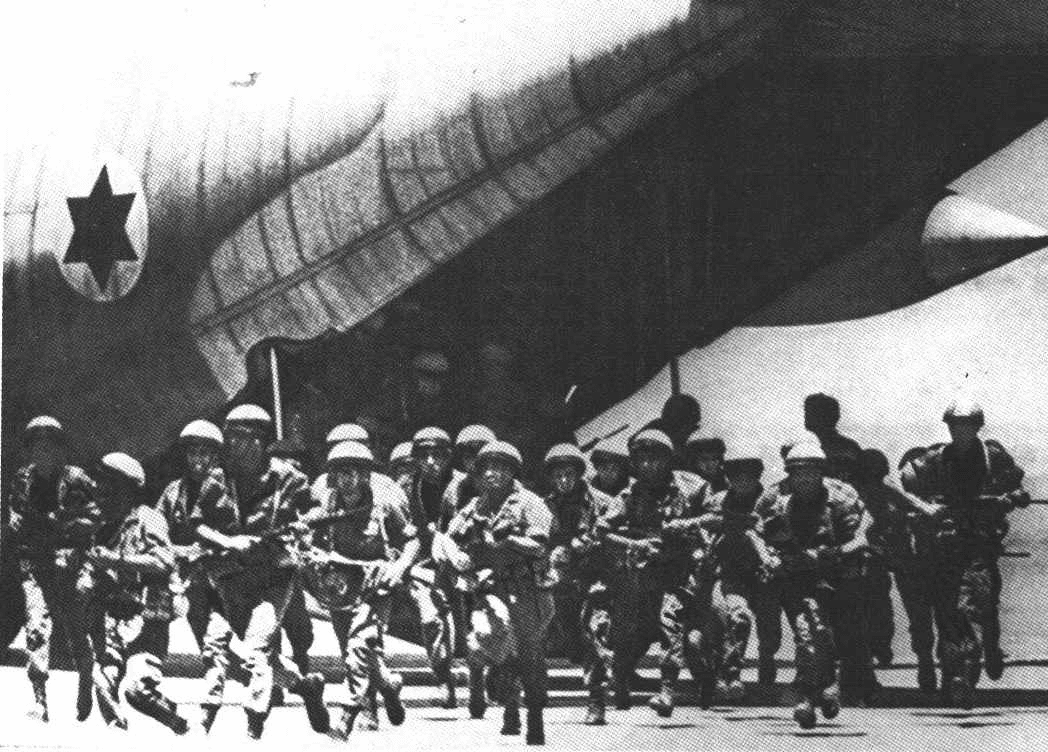
In one of the most famous airborne operations in the history of the Israeli occupation army, Israeli forces carried out an air assault on Entebbe Airport in Uganda. C-130 aircraft carrying Israeli commando forces took off and covered a distance of 4,000 kilometres to free hostages who had been held aboard a French aircraft. The forces and military vehicles were landed directly on the airport tarmac, and the operation was carried out successfully.
- Operations in southern Lebanon (1982–2000)
During its presence in southern Lebanon, Israeli forces carried out hundreds of helicopter-borne airborne operations to target resistance bases. The most notable of these were during the 1982 invasion, when armoured forces and paratroopers were landed behind Lebanese and Syrian lines in the Bekaa Valley.
- Recent operations in the Gaza Strip and the West Bank
Over the past two decades, Israeli forces have carried out dozens of nighttime helicopter-borne air operations to arrest wanted individuals or carry out targeted assassinations. These operations rely on secrecy of movement and speed of execution. Those carried out in the Gaza Strip have been a mix of success and failure, as the Izz ad-Din al-Qassam Brigades, the military wing of Hamas, became known for their considerable ability to counter such landings.
Air forces in modern wars are a factor of superiority and dominance and have consistently been decisive in all complex battles. Weakness in this domain, if not its outright absence, has been a principal cause of the defeats suffered by Arab and Islamic states over the past 150 years.
Islamic groups have shown greater success in confronting American and Israeli airborne landings than some states and international forces did!
In terms of Special Forces, the Muslim world has seen several advanced experiences in this regard.


