


In a quiet neighbourhood of Novi Pazar in south-western Serbia, Muslims gather every year to pray for people who were killed more than eight decades ago. The site is known as "Hadžići", but for many Bosniaks of the Sandžak it is not merely a neighbourhood; it is a name tied to one of the most painful and obscure chapters of their recent history.
On 4 September 2026, the Islamic Community in Sandžak marked the "Day of the Martyrs of Hadžići" with the recitation of the Qur'an and prayers for the victims, amid calls to preserve the memory.
The Sandžak: A Muslim Region at the Crossroads of the Balkans
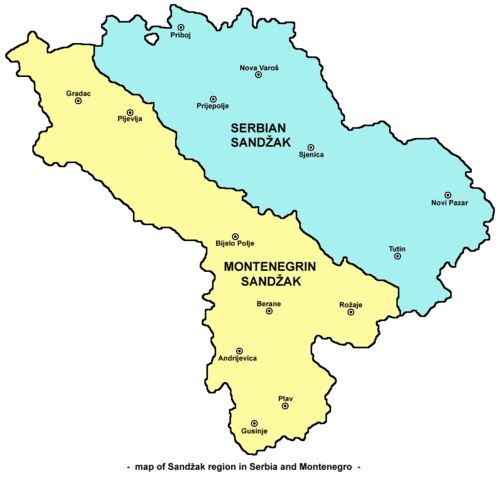
The Sandžak is a historical region that today extends between Serbia and Montenegro, and Novi Pazar is its most prominent city and the historic centre of its Muslim Bosniaks.
During the Second World War, the region became an extremely complex battleground, contested by occupation and Axis forces, the Yugoslav communist movement "the Partisans", the Serbian "Chetnik" formations, along with local groups and forces.
Muslims in parts of the Sandžak were subjected to attacks and massacres by Chetnik forces during the war, while in other areas local armed forces were formed to defend towns and villages, in a context in which the protection of civilians was intertwined with political conflicts and shifting military alliances.
As the war drew to a close, the balance of power changed decisively.
On 28 November 1944, Partisan forces entered the city of Novi Pazar, and the new communist authority began consolidating its control over the region. It is here that the story of Hadžići, which has remained present in the memory of the Sandžak's Muslims, begins.
Arrests, Then Executions
Bosniak sources and local testimonies state that the period following the entry of the communist forces saw a wave of arrests targeting figures from Novi Pazar and other areas of the Sandžak, among them merchants, notables, political and religious figures, and individuals accused of collaborating with the wartime authorities or of opposing the new regime.
A number of those arrested were taken to prisons, after which executions were carried out in the Hadžići area, some at night and some in public.
Documented names and dates of people executed during that period do exist. Local historians cite, from the book "Chronicles of Novi Pazar in the People's Liberation War", published in 1960, a list of people executed in December 1944 and in January, February and March 1945.
Recent reports based on a judicial document from January 1945 also revealed a ruling by a military court in Novi Pazar sentencing 17 people to death by firing squad, documentary evidence that part of the liquidations took place under the cover of judgements issued by the courts of the new authority.
However, Bosniak sources maintain that many other killings were carried out through summary procedures, or without announced and transparent trials, which makes it more difficult to determine the full scale of what happened.
Hadžići Becomes a Site of Executions
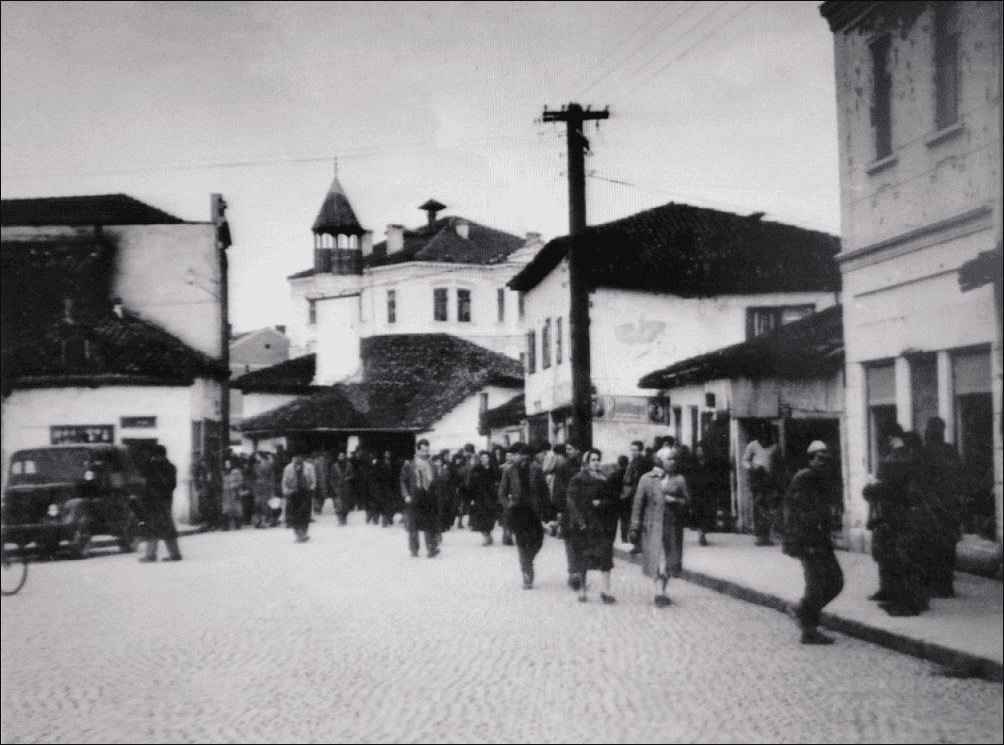
Image of Novi Pazar in November 1944
Hadžići was at that time an open area on the outskirts of Novi Pazar, and the aerial bombardment the city suffered during the war had left large craters in the ground.
Local testimonies and accounts state that some of these craters were later used to bury people executed in the area, and that possible mass grave sites remained, over the decades, without a comprehensive archaeological and judicial investigation to settle the number of those buried and their identities.
Bosniak popular memory describes Hadžići as a site where part of the region's social and political elite was liquidated after the war, while how each of those executed was classified and why they were targeted remains a matter requiring more precise historical research.
How Many Were Killed?
This is one of the most sensitive points of the case.
The Islamic Community in Sandžak, relying on local testimonies and research, states that the number of those killed in Hadžići between 1944 and 1946 exceeded 2,500 people. Other Bosniak sources repeat a figure of more than 1,500 dead. However, the figure is not academically settled.
The reason is that the Hadžići file has not, according to the available sources, undergone a comprehensive archival and archaeological investigation capable of identifying all the victims, the burial sites and the circumstances of each execution.
The Execution of Prominent Figures
Among the best-known people killed in Hadžići are Atif, or "Ačif", Hadžiahmetović, one of the most prominent Muslim politicians in Novi Pazar during the war, and Ahmed Dasta.
Both were executed publicly on 21 January 1945. Circulating documents indicate that they were among those convicted by a military court belonging to the new authorities.
The legacy of Hadžiahmetović in particular remains highly contested. Bosniaks who defend him point to his role in organising the defence of Novi Pazar against Chetnik attacks, while the official and traditional Serbian narrative describes him as a person who collaborated with the Axis powers during the war.
For this reason, the tragedy of Hadžići extends beyond debate over a single figure. It also concerns hundreds of people whose files were never researched sufficiently to establish the nature of the charges against them, whether they received fair trials, or whether they were executed in the wave of political retribution that accompanied the consolidation of communist rule in Yugoslavia.
Why Do Muslims Commemorate the Memory on 4 September?
It is important to distinguish here between the date of the massacre and the date of commemorating it.
The main executions took place during the months following November 1944, not on 4 September.
The choice of 4 September as an annual day to commemorate the victims of Hadžići is also linked to events of 2010, when a confrontation occurred between Muslims and Serbian police over the defence of a waqf (endowment) property in the Hadžići area. Since then, the day has become an occasion to commemorate those killed in the communist era and to defend the site connected with their memory.
Thus two memories have merged in Hadžići: the memory of those killed in the 1940s, and the memory of the modern struggle over land, endowments and identity.
This Year's Commemoration Takes on a Different Character
The 2026 commemoration acquired additional significance, as it came only weeks after an important step to end a long institutional division among Muslims in Serbia.
On 14 August, the "Document on the Reunification of the Islamic Community" was signed in Novi Pazar, in an effort to end a division that had lasted since 2007 and had affected the religious life of the Sandžak's Muslims for years.
Accordingly, Mufti Muamer Dudić, during this year's Hadžići ceremony, pointed to unity, saying that remembering the victims should not become a means of creating new hatred.
He said that the Bosniaks are not demanding privileges from the state, but justice, security, equality before the law, freedom of religion and living with dignity, calling for a society in which Bosniaks, Serbs, Albanians, Roma and others enjoy the same protection.
A History Whose File Has Not Yet Been Closed
The story of Hadžići is not merely a story about people killed more than eight decades ago.
It is also a story about the difficulty of writing history after wars, about the gap between collective memory and the historical document, and about victims many of whose names remain outside the public record.
There is enough documentation to establish that widespread executions took place in Novi Pazar after the arrival of communist authority; names, dates, death sentences and testimonies about killings in Hadžići exist.
Yet the full scale of the tragedy still requires independent research in the archives, identification of burial sites, and examination of judicial and military records, before a definitive figure for the victims and an accurate historical account of everything that happened can be reached.
For the Muslims of the Sandžak, the waiting itself is part of the case.
After more than eighty years, their children and grandchildren gather at the same place, demanding something that seems simple yet has not yet been fully achieved: that the names of those who were killed be known, that it be known how they were killed and where they were buried, and that Hadžići take its place in the region's history not only as an inherited narrative, but as a documented event in which the memory of the victims is not lost.


