


At least 92 people have been killed in the collapse of gold mines in Sudan within days, a toll that once again highlights the deadly risks faced by thousands of workers in artisanal mining, as war and economic collapse push more Sudanese to seek gold as one of the few remaining sources of income.
In the most recent incident, a gold mine collapsed on Sunday, 20 September 2026 (9 Rabi al-Akhir 1448 AH) in the Awni area in northern Sudan near the border with Egypt, killing at least ten people and injuring 21 others.
Survivors said rescue teams recovered ten bodies and 21 injured people, while search operations continued for people believed to still be trapped under the rubble, with no confirmed figure for the number of missing.
The incident came only days after a larger disaster at the "Al-Zarafa" mine near the city of En Nahud in West Kordofan state, where the Sudan Doctors Network announced that at least 82 people were killed when the mine collapsed.
The announced death toll from the two incidents thus rises to at least 92 people within a short period.
Al-Zarafa mine: dozens of victims in hours
The Al-Zarafa mine disaster occurred in an area controlled by the Rapid Support Forces near En Nahud. The Sudan Doctors Network reported that the collapse of the mine killed 82 people, including women and children, in addition to injuring others.
The network said the absence of safety measures and technical supervision at artisanal mining sites puts workers' lives at risk, and called for measures to protect miners.
The disaster again showed the scale of risks in traditional mines, where miners work in primitive pits and tunnels that can collapse without warning, with limited rescue equipment and medical care in remote areas.
Why are Sudanese risking their lives in the search for gold?
The growing interest in mining cannot be separated from the ongoing war in Sudan since April 2023 between the Sudanese Armed Forces and the Rapid Support Forces.
The war has destroyed broad sectors of the economy, disrupted agriculture, trade and industry, and displaced millions of people, while the Sudanese pound has lost a large part of its value.
Before the war broke out, the dollar was worth about 570 Sudanese pounds, while its price exceeded 3,500 pounds by April 2026, a collapse that directly affected the prices of food, fuel, transport and basic needs.
Estimates by the United Nations Development Programme indicate that Sudan lost about $6.4 billion of its gross domestic product in 2023 alone, roughly a quarter of the GDP of nearly $26 billion in that year.
With shrinking job opportunities and the collapse of traditional sources of income, artisanal mining has become an economic option for a growing number of Sudanese, despite the major risks surrounding it.
Joseph Tucker, a researcher specialising in the Horn of Africa at the International Crisis Group, said the economic crisis is increasing demand for gold and miners' willingness to work in poor conditions, even with the deadly risks involved.
Primitive mines without adequate protection
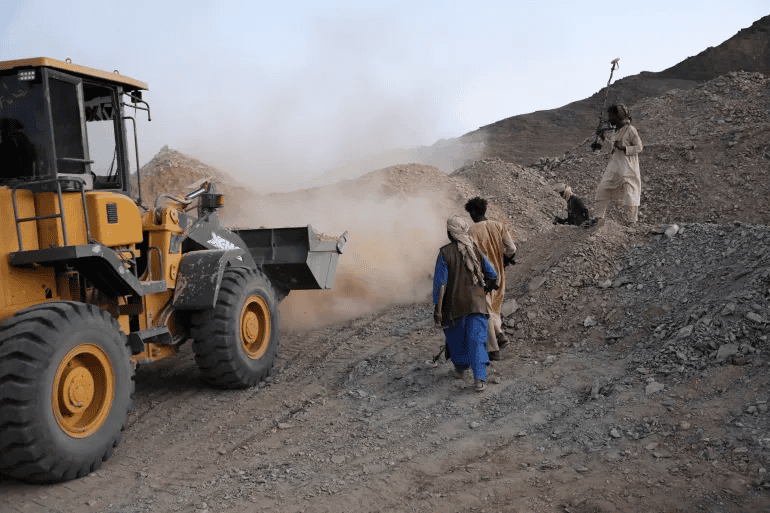
Most artisanal mining takes place in remote areas and relies on primitive means of digging, extracting ore and processing it.
Tucker explained that many of these mines are informal and unregulated, and lack modern technology, appropriate infrastructure and specialised safety equipment.
These are not the first times that large numbers of victims have fallen in Sudan's mines.
In past years, mining areas have recorded a series of collapses and accidents caused by the caving in of wells and tunnels, while rescue operations are made far more difficult by the distance of sites from cities and the weakness of medical and logistical capacities.
During the current year, the Sudanese government spoke of plans to regulate traditional mining and manage metal markets, and authorities called for addressing the environmental damage and health risks associated with mining activities.
However, the war, security fragmentation and the weakness of state institutions make it more difficult to impose oversight on the thousands of mining sites spread across the country.
70 tonnes of gold despite the war
Paradoxically, Sudan's gold sector has continued to record high production despite the war.
According to government data, Sudan produced about 70 tonnes of gold in 2025, after announced production reached about 64 tonnes in 2024, compared with about 41.8 tonnes in 2022 before the war broke out.
Exporting gold through official channels has brought substantial revenue to the state, but a large part of production does not pass through government channels.
Experts say large quantities of Sudanese gold leave the country through smuggling and informal trade networks, depriving the public treasury of part of its revenue at a time when the country is suffering a severe economic crisis.
Tucker said that "a large part of Sudan's gold leaves the country through smuggling or illicit networks instead of passing through government channels that could directly contribute to public revenues."
Gold and war
Gold in Sudan is no longer merely an economic resource; it has also become part of the war economy.
Gold deposits are spread across wide areas of the country, including areas under army control and others controlled by the Rapid Support Forces or various armed and local groups.
Control over production areas, trade routes and export has become a source of influence and financing, while Sudan's gold trade networks are subject to growing international scrutiny.
The United Arab Emirates is one of the main destinations for Sudanese gold. The Sudanese government has also accused Abu Dhabi of supporting the Rapid Support Forces, accusations the UAE denies.
In 2025, Sudan brought a case before the International Court of Justice accusing the UAE of complicity in genocide through its support for the Rapid Support Forces. The court dismissed the case for lack of jurisdiction, without ruling on the validity of the allegations concerning military support.
Wealth turning into danger
Sudan possesses one of the largest gold production sectors in Africa, but the collapses at Awni and Al-Zarafa reveal another side of this wealth.
While the importance of gold has grown as other economic sectors collapsed, thousands of Sudanese continue to work in mines lacking even the most basic safety standards, driven by the need for a source of income in a country exhausted by more than three years of war.
If the toll of the two incidents has already reached at least 92 dead, the continuing search for missing persons at the Awni site means the figure may not be final.
In a country where livelihood opportunities have become scarcer, the gold rush has turned for many from a chance to escape poverty into a gamble that may end under the rubble of the mines.


