


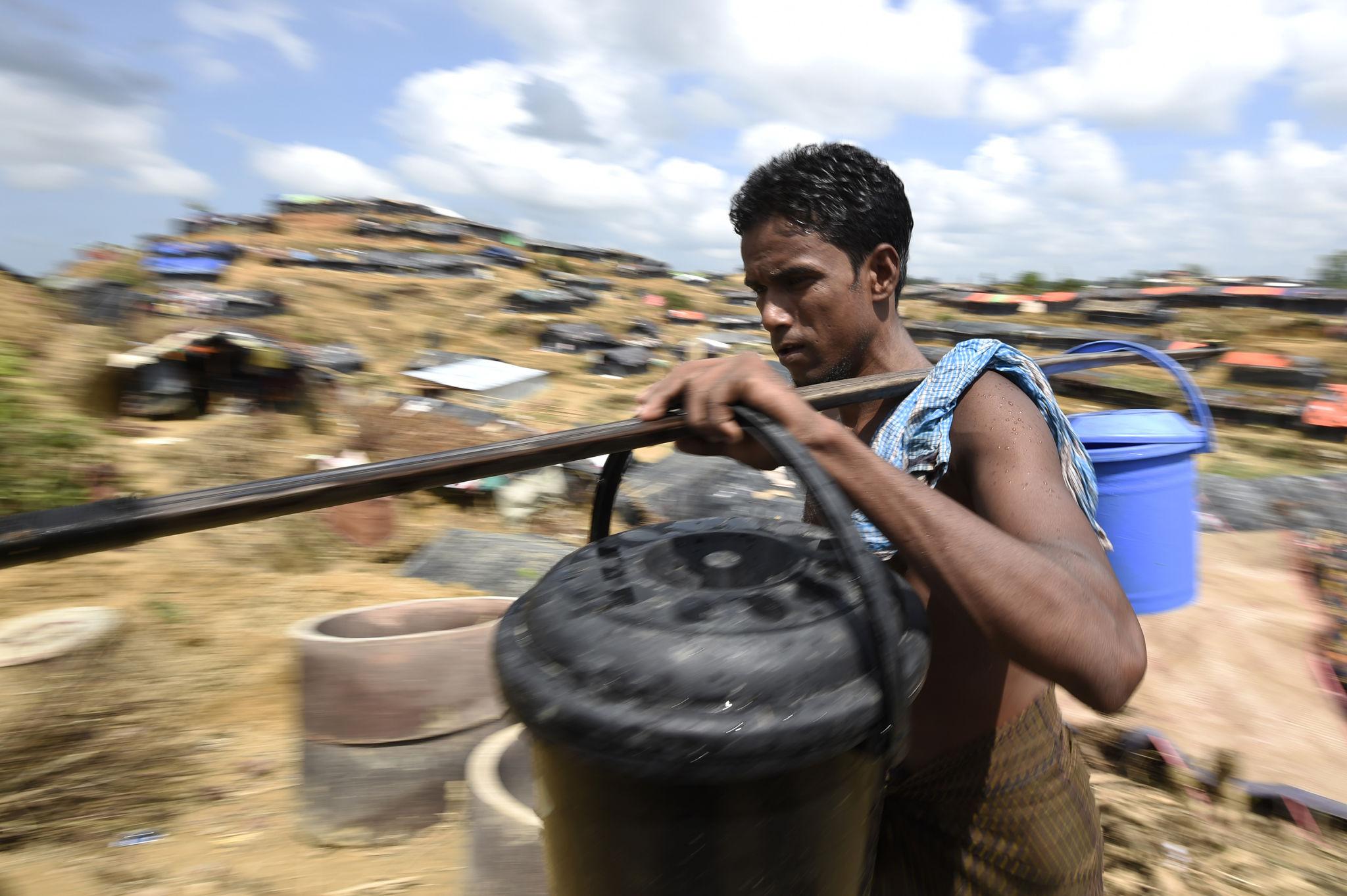
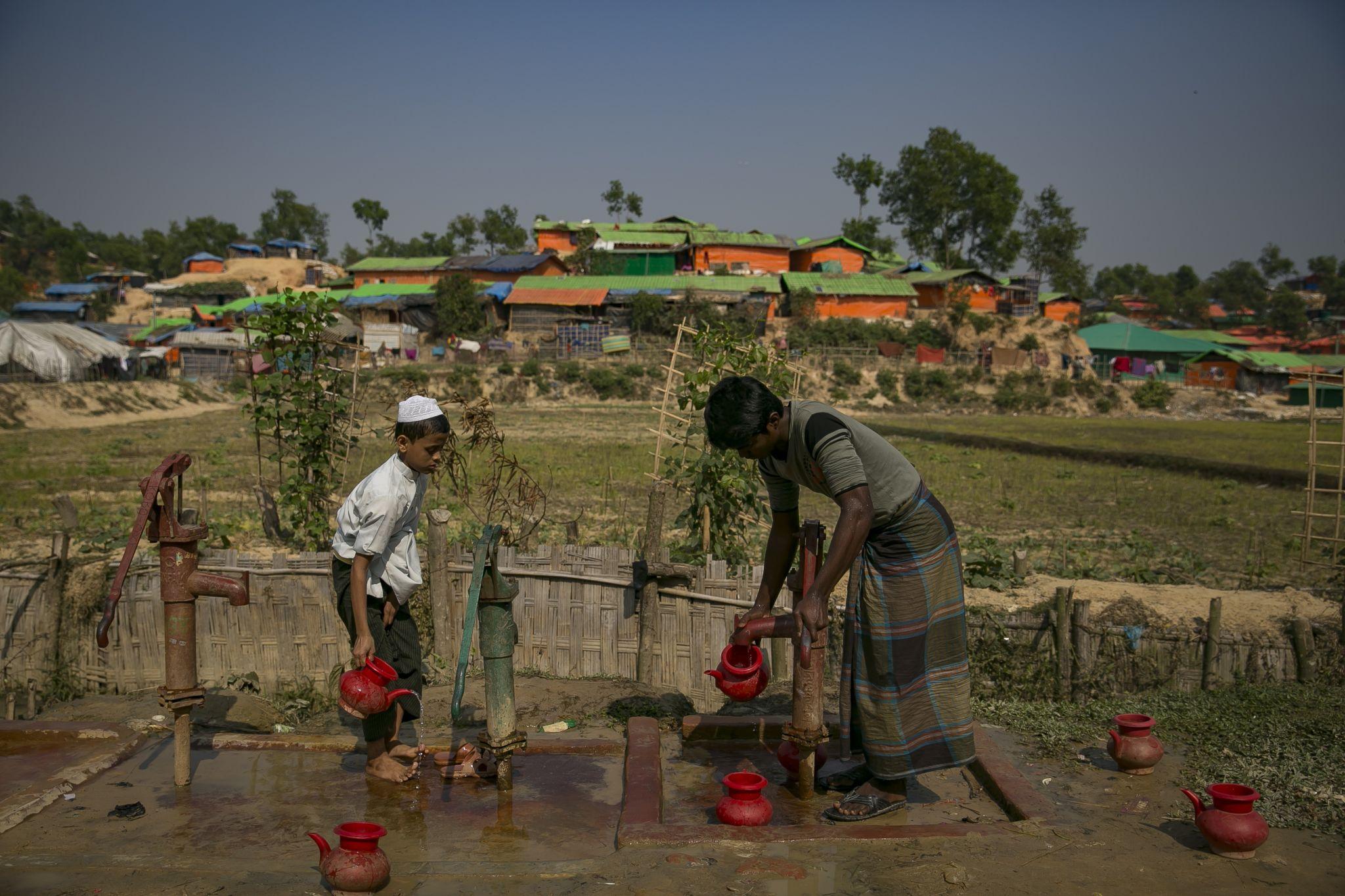
About 25,000 Rohingya refugees in Camp 22 in the Teknaf area of Cox's Bazar, Bangladesh, face an acute water crisis, as they depend primarily on natural stream water, which declines sharply during the dry season.
According to a field report published by bdnews24 on 18 September 2026, corresponding to 7 Rabi al-Akhir 1448 AH, a refugee receives up to 20 litres of water per day during the rainy season, which must be used for drinking, cooking, bathing and hygiene. However, the quantity may fall during the dry season to between 5 and 15 litres per person per day.
One refugee said the water shortage forces his family to choose between basic needs, explaining that if they use the water for cooking, there may not be enough left for bathing.
Camp residents rely on a single station for treating surface water, while water is distributed through public points twice a day. When nearby water sources dry up, workers have to bring water through a line extending to a mountain stream about five kilometres away.
Part of the crisis is attributed to the rocky nature of the Teknaf area, which makes it difficult to extract sufficient quantities of groundwater, while the presence of large numbers of refugees since the major influx of 2017 has increased pressure on the area's limited water resources.
The Bangladesh Refugee Relief and Repatriation Commissioner, Mizanur Rahman, said the water crisis affects Ukhia and Teknaf but is more severe in Teknaf, noting that during dry periods the authorities are forced to impose strict water rationing.
The effects of the crisis are not limited to the Rohingya, as pressure on groundwater has created difficulties for Bangladeshi host communities and farmers in accessing water, raising concerns about increased tension over limited resources.
The water crisis comes at a time when the humanitarian response for the Rohingya faces growing financial pressure. The Joint Response Plan for 2026 requires about 710.5 million US dollars to provide assistance to 1.6 million people, including refugees and Bangladeshi host communities.
More than one million Rohingya live in Bangladesh after most of them fled Myanmar, while efforts to repatriate them remain stalled in the absence of conditions that would guarantee a safe, voluntary and sustainable return.


