

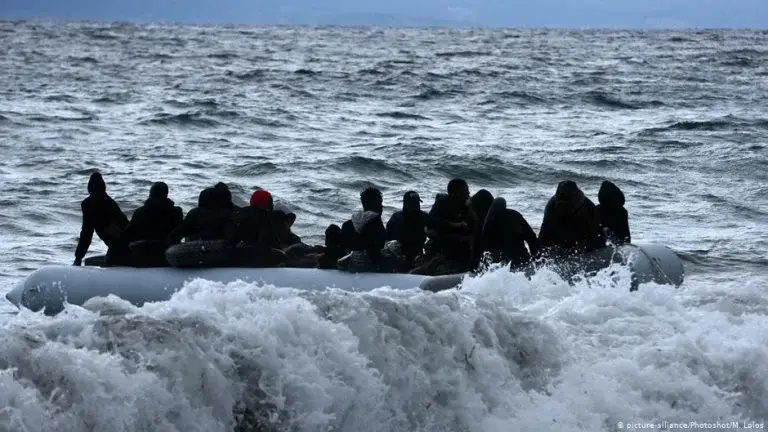
At least 22 migrants are believed to have died on their journey to Greece last week, when their small boat was found off the coast of the Greek island of Crete on the night of 27 March. The inflatable boat had set sail from the city of Tobruk in eastern Libya on 21 March.
The Greek coast guard announced that a vessel belonging to the agency Frontex, which was in Greek waters, was able to save the lives of 26 people on board the boat, including a woman and a minor. The boat was discovered approximately 100 kilometres south of Crete on Friday night. Two of the survivors were transported to a hospital in Crete for medical treatment.
According to Greek officials, the survivors included 21 Bangladeshi nationals, four members of South Sudan, and one Chadian national.
Survivors told authorities that two of the South Sudanese survivors, aged 19 and 22, are suspected of being the smugglers responsible for the operation; the two men have been detained on charges of "illegal entry into the country" and "manslaughter."
Bodies thrown into the sea
The Greek coast guard told Agence France-Presse (AFP) that the inflatable boat had apparently encountered "unfavourable weather conditions" during the journey, and added in a statement: "During the journey, the passengers lost their bearings and remained at sea for six days without food or water."
Survivors confirmed that the bodies of those who died during the journey "were thrown into the sea on the orders of one of the smugglers."
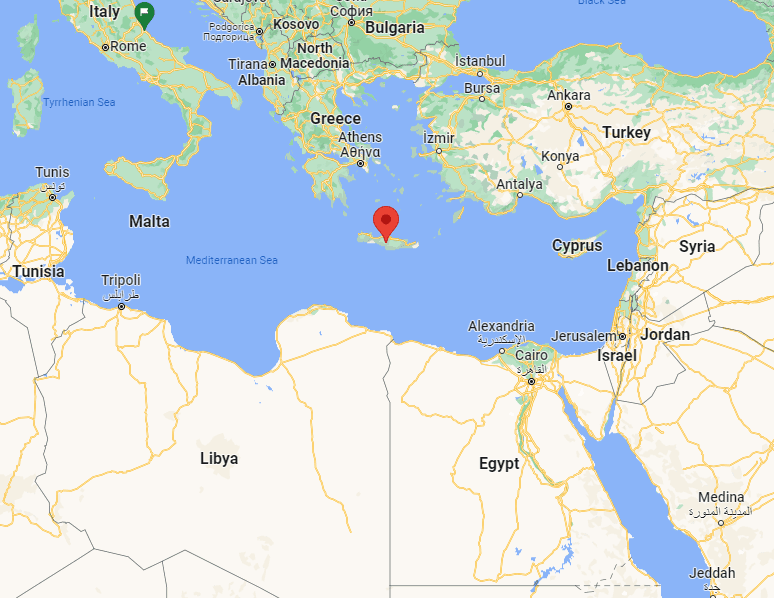
A map showing the Greek island of Crete, in addition to Libya and other countries in the Mediterranean Sea.
Smuggling gangs are often known to provide migrant boats with just enough fuel to reach Greek waters, expecting coast guard vessels or private rescue crews to pick them up. However, many are simply left to face death.
Europe tightens irregular entry
According to the International Organization for Migration (IOM), 559 migrants died in the Mediterranean Sea during the first two months of 2026, roughly double the number recorded for the same period last year.
The actual number of deaths is presumed to be far higher than the officially recorded figures.
A spokesperson for the European Commission said: "These tragedies once again underline the need to intensify work with partner countries along migration routes and to redouble efforts to combat smugglers."
This statement follows the European Parliament's vote last week in favour of tightening migration policy and approving the concept of establishing "return hubs" outside the bloc to process asylum applications, a measure that human rights groups have described as "inhumane."
Greece toughens penalties
Greece hardened its stance towards migrants over the past year, enacting new laws to strengthen border controls, increase fines and prison sentences for smugglers, and make asylum laws more difficult.
Crete has become a major gateway for migrants departing from North Africa, to the extent that it was forced to suspend asylum procedures for several months last year due to intense pressure.
Greece, and particularly its islands in the Mediterranean and Aegean seas, has remained at the forefront of irregular migration movements to Europe from the Middle East, Africa and Asia for more than a decade.
Sources: Infomigrants, AFP, dpa, Reuters.


