


Over the past year, more than 400 Rohingya fishermen were subjected to enforced disappearance by the Arakan Army. During the same period, abductions of Bangladeshi fishing boats operating on the Naf River were repeated, with assets estimated at millions of taka looted and Bangladeshi fishermen detained. Several news reports indicate that 188 people were later released, yet more than 200 families are still waiting for the return of their loved ones, while others remain in the grip of the Arakan Army with their fate unknown.
A Lifeline Under Threat
For generations, the Naf River has been the main source of livelihood for communities living along the border between Bangladesh and Myanmar. Families have fed themselves from its waters, the children's school fees have been paid from its yields, and along its banks has taken root a way of life passed down by the poor from generation to generation, for whom fishing was the means of survival.
Since 1445 AH (2024 CE) until today, a series of abductions carried out by the "Arakan Army" has turned the river into a place of fear, leaving fishermen and their families captives of anxiety and waiting. Fishermen of Bangladesh and the Rohingya depend on the Naf River for survival, yet the armed groups affiliated with the Arakan Army in northern Rakhine State have escalated their targeting of civilians for multiple purposes.
Fishing has been among the most prominent occupations of the Rohingya since ancient times until today; many of them owned boats, trawlers and wooden cargo ships, but they lost everything within hours during the violence of 1438 AH (2017 CE). Some Rohingya today work as fishing labourers aboard Bangladeshi vessels to support their families, yet the Arakan Army seizes them in permanent abductions, such that their return from its detention is unlikely. The targeting has not been limited to the Rohingya; it has also reached local Bangladeshi fishermen.
Fatima's Story
Fatima, the wife of Fayez Ullah, stated that on 26 Muharram 1446 (2 August 2024) the "Arakan Army" abducted her husband along with thirty other people; the boat's captain was Dilo Mazi.
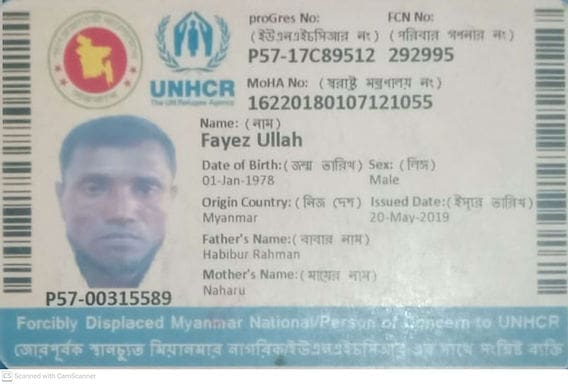
Fayez Ullah's card held by the Office of the United Nations High Commissioner for Refugees.
She said: "We saw a picture of them posted on the Arakan Army's Facebook page, and since then I have received no information about my husband or the thirty people who were on the boat. Since the day of the arrest I have been searching everywhere, but no one can tell me whether my husband is alive, injured or killed. I live in constant fear and unending bewilderment."
Fayez Ullah suffers from several chronic illnesses, including kidney stones and other bodily pains, and is unable to do heavy work. As the father of six children, he was forced to go out fishing to support his family, and he was abducted on 2 August.
Fatima added: "The food rations are not enough to meet the family's needs; that is why he had to work to ensure our children survive."
She herself suffers from high blood pressure and bears the hardship of raising four daughters and two sons alone. She said: "Without their father, my children suffer hunger, crying and pain every day in this harsh camp. We have no source of income, and I cannot provide food, clothing or the most basic necessities of life. My daughters wander the roads searching for their father, crying day and night and calling: 'Father, Father.' Their mental state is deteriorating day by day."
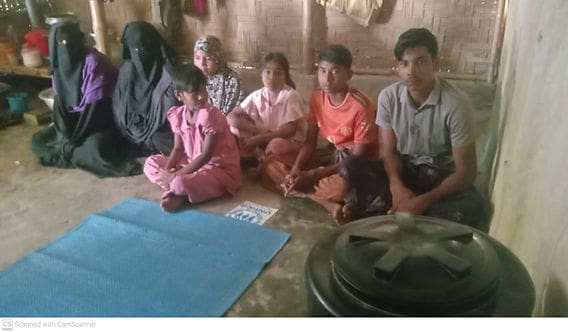
Fayez Ullah's family.
She added: "I beg you with tears in my eyes: search for my husband and tell me any information you find. Help me bring him back to us. For three months now we have been living unbearable suffering from poverty, fear and hunger."
The family of the boat's captain, Dilo Mazi, Fayez Ullah's captain, reported that he had been sentenced to ten years in prison in the Arakan Army's jails. They also pointed to the presence of another group of fishermen led by a captain named Diya, but they do not know exactly how many people were on his boat.
Adopting a False Identity by Force for Survival
A group of fishermen were released after they were forced to claim they were Bangladeshis. Among them was Mohammed Shafi, a fisherman aged sixty-five who lives in Camp 14, Sector B-3. He had been the leader of twenty-one fishermen and had practised fishing since his youth, first in Myanmar and later along the Naf River.
On 14 Sha'ban 1446 (13 February 2025), Shafi was leading a group of twenty-one Rohingya fishermen when they were intercepted by "Arakan Army" rebels near south Maungdaw, in the Mint Hlaw (Myrula) Naamai-8 river, around midday.
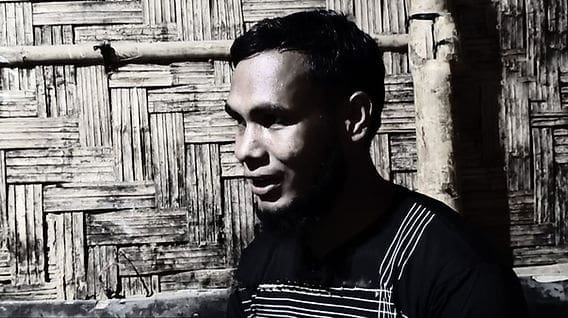
A photo of Shafi.
Shafi said: "They arrested us along with our boats; we were all Rohingya fishermen, and we had nothing with us but fishing nets." Mohammed Sultan, owner of one of the trawlers, told bdnews24 that the "Arakan Army" pursued the boat with speedboats and abducted everyone on board, and that assets estimated at about three million taka were looted.
The group was taken to Sector 8 (Naamai-8) in Mint Hlaw, where they were held together. After sixteen days, Shafi was separated from the others and taken alone to Maungdaw, where he was interrogated and had his personal history recorded.
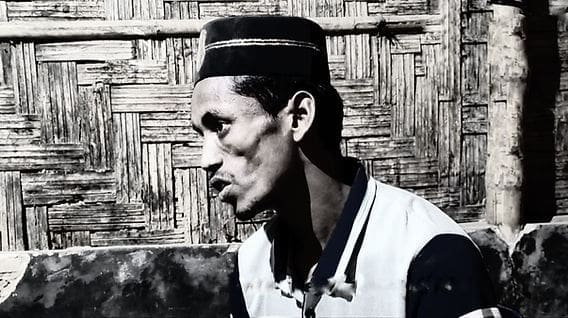
A fisherman from Shafi's boat.
Shafi remained detained in an Arakan Army barracks in Maungdaw for at least seventeen more days, isolated from the rest of the group. While the others were later transferred to another Arakan Army camp, he remained separated from them, while, according to reports, negotiations were being conducted with the Bangladeshi authorities for their release.
Release Under Threat and Extortion
After more than a month of detention, the fishermen were released in mid-March, but the release took place under the shadow of threat. Sources reported that many of the fishermen were forced to pay "taxes" to the Arakan Army in return for being allowed to fish in the area. A Bangladeshi fisherman also stated that they were beaten immediately upon arrest without any interrogation, and that all their equipment was looted.
The reasons behind the targeting of fishermen on the Naf River remain unclear; several fishermen and traders reported that the Arakan Army abducted people not for crossing into Myanmar's waters, but directly from within Bangladeshi territory. One fisherman, who asked not to be named, said that some of those detained were released in exchange for supplies of food and medicine.
A Bangladeshi boat captain also told the newspaper Prothom Alo that Arakan Army personnel looted fish, fuel and provisions from the boats before eventually releasing them.
Their boats and fishing nets were never returned to them; the warning was not merely a threat, but a sentence of hunger for the fishermen's children and families. The Arakan Army also confiscated provisions and medical supplies to support its combat operations.
Shafi added: "We claimed to be Bangladeshis; the boat owner contacted the Bangladesh Border Guard, and we were handed over to Bangladesh, but we received no compensation, as the Arakan Army confiscated all our equipment." He continued, explaining: "We are simple, uneducated people; if we do not catch fish in the river or the sea, how can we feed our families? Fishing has been my profession since I lived in Myanmar, and it is the only work I know."
An Atmosphere of Terror
Younger fishermen share the same feeling of fear. Hashim, aged twenty-six, said that Arakan Army rebels told them that fishing on the Naf River now required prior permission. He added: "They told us: if you want to fish here, you must make an agreement with the Arakan Army, or we will kill you at sea."
What happened to Shafi is not an isolated case; 1446 AH (2025 CE) witnessed a series of repeated abductions along the Naf River. In February, fishermen were abducted near Shah Porir Dwip, Golachar and Naikhongdia; in August, armed men abducted twelve fishermen from a single boat, followed by dozens of others over successive weeks.
In 1446 AH (early August 2024 CE), the Bangladesh Border Guard forces reported the abduction of fifty-one fishermen, while Teknaf Upazila recorded fifty-eight cases, and the Trawler Boat Owners Association announced that there were fifty-seven detainees.
Another fisherman named Amin said that the "Arakan Army" had abducted nearly four hundred Rohingya fishermen since 1445 AH (2024 CE), adding: "They have also abducted hundreds of Bangladeshi fishermen; some Bangladeshis were released after negotiations with the Bangladesh Border Guard, but Rohingya fishermen have never been released, and have instead been subjected to permanent enforced disappearance."
In 1447 AH (early December 2025 CE), Netra News confirmed the release of one hundred and eighty-eight people, while more than two hundred families are still waiting for the return of their loved ones. Trawler owners also reported that among the Arakan Army's detainees were Rohingya day labourers who had been working aboard fishing boats.
Human rights organisations have condemned the abductions and called for the immediate release of civilians and for stronger protection for fishermen working in border waters.
Nevertheless, solutions appear remote for those living on the banks of the Naf River; repeated arrests have turned the river of life into a river of fear. Until civilian lives are safeguarded and fishermen can practise their work without threat, families along the Naf will remain caught between survival and danger, hostages to a conflict they did not choose and do not control.
Rohingya to Grapher.


