

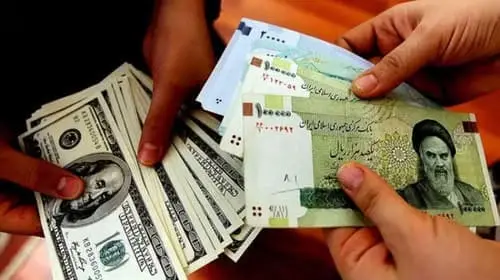
Numbers in Iran are no longer mere economic indicators; they have become a clear headline of a deep crisis. That a banknote worth 10 million rials is equivalent to only about $7 on the free market is not a passing paradox but a shocking picture of the scale of the collapse.
The issuance of this denomination, the highest in the history of the Iranian currency, does not stop at its symbolic value. Its significance grows when we learn that it came only a few weeks after the release of the 5 million rial note, which was then the highest. This striking acceleration in printing high denominations does not reflect monetary development but an acceleration in the loss of value, as if the currency is racing to keep up with its own collapse.
The harshest paradox is that this is happening in a country that holds the third-largest oil reserves and the second-largest gas reserves in the world. Here the sharp contradiction emerges: enormous natural wealth alongside an eroding currency that can barely buy anything. It is an equation that cannot be explained by the logic of normal economics, but only through the language of deep imbalances in management and policy.
The figures reinforce this grim picture: inflation approaching 47.5%, and a rise in food prices of about 90% at the start of 2026. In such a context, issuing larger denominations is not a solution but an implicit admission that the tools for controlling inflation have failed, and that the response has shifted from containing the crisis to adapting to it.
The clearest truth is that the Iranian rial does not reflect the country's poverty but the cost of the choices made in its name. Major monetary crises do not arise from nothing; they are the result of accumulated political and economic pressures, the price of which is ultimately paid by the most vulnerable classes.
Thus, the 10 million rial note is no longer merely a means of exchange, but a silent document that says everything: when a currency loses its value, what is eroding in reality is not the paper… but trust.


